
Opto-electronic Characterisation
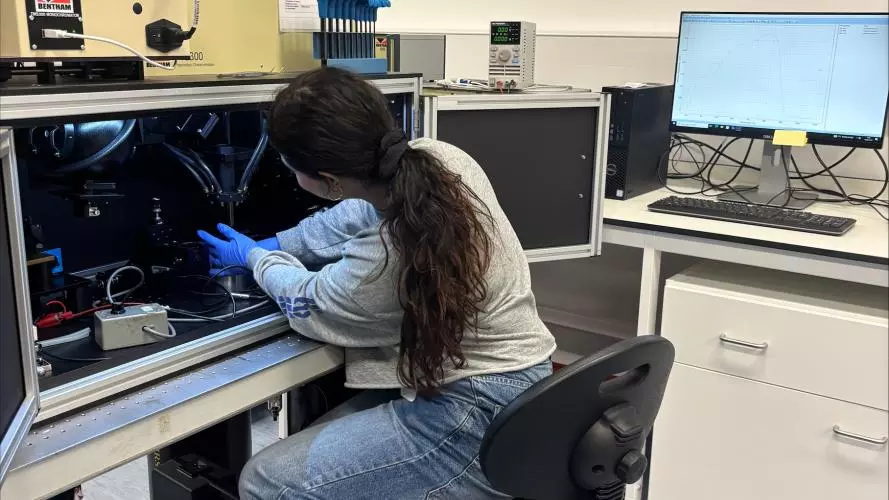
External Quantum Efficiency (EQE)
For external quantum efficiency measurements with a spectral resolution for photovoltaic and photodetector devices.
Features:
- Dual Xenon/ quartz halogen lamps
- Measurement range; 300 - 1100 nm
- Direct determination of device spectral response (SR, A W-1)
- Direct determination of device external quantum efficiency (EQE/IPCE, %)
- Direct determination of total reflectance, R and transmittance, T, to convert EQE to internal quantum efficiency (IQE, %)
- Power source for bias dependent EQE measurements
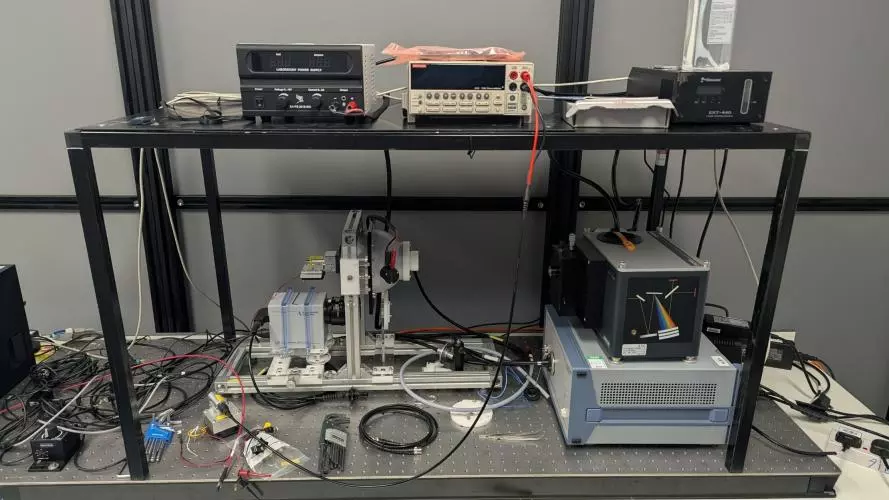
Photoluminescence Quantum Yield (PLQY)
For photoluminescence and electroluminescence measurements of thin films, photovoltaics, photodetectors and LEDs.
- Several laser excitation wavelengths
- LED: 365 nm, 450 nm
- Laser diodes: 520 nm, 447 nm
- Large integrating sphere for precise quantum yield measurements
- Calibrated Si-CCD (CAS140D spectrometer) for quantum yield measurement
- Uncalibrated iDus InGaAs detector for PL measurements into the IR
- LED stability measurements possible
Solar Simulator
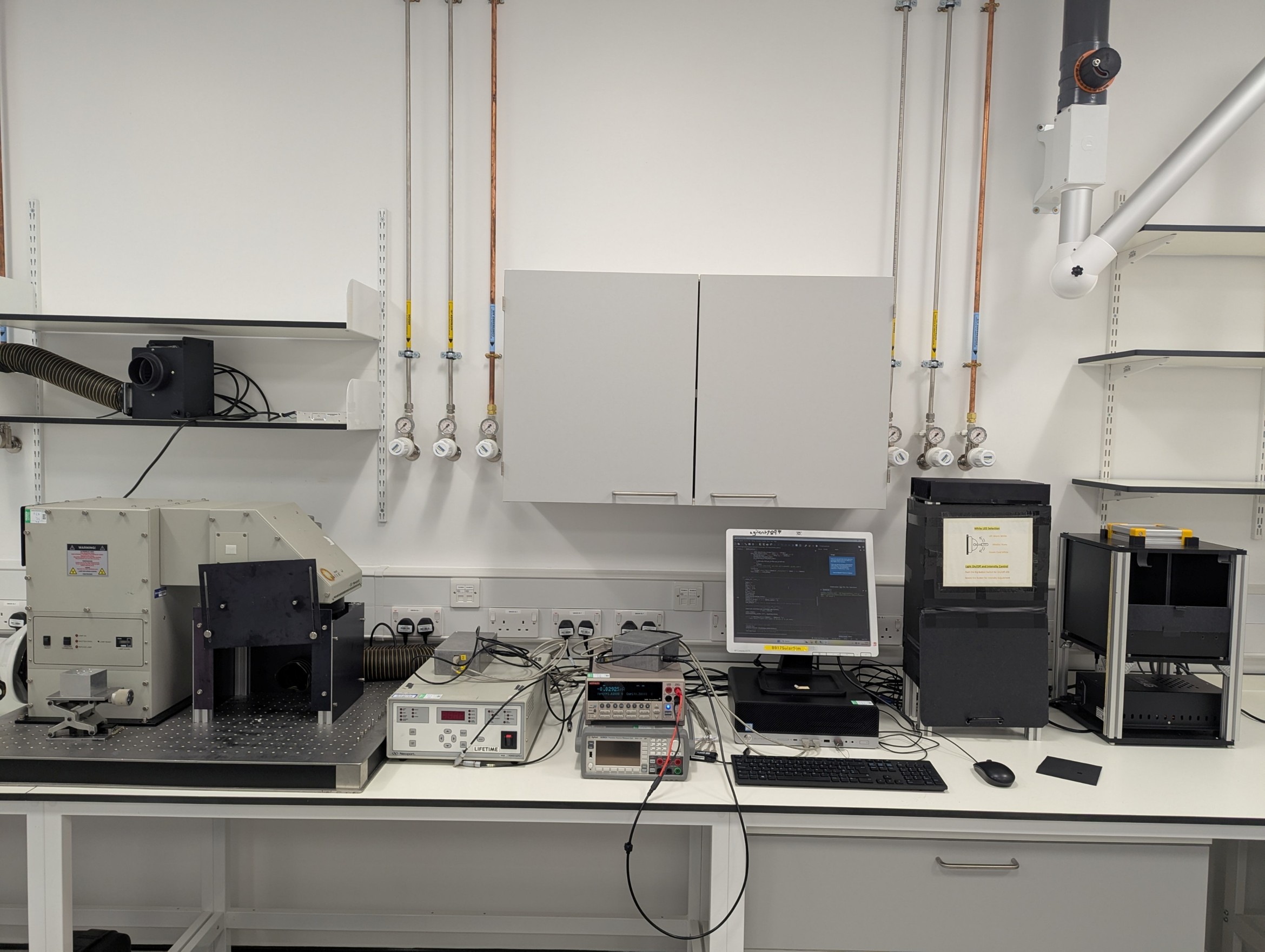
Used to perform electrical characterisation of photoconversion devices in dark conditions, under 1 sun, and also in low-light conditions, simulating indoor use.
- Newport AM1.5G Solar Simulator with Xe arc lamp (incl. Si calibration cell)
- Keithley 2400 (integrated with custom python based control software on PC) for solar cell characterisation
- Agilent B2902A precision source/measure unit (sensitivity down to 10-12 A) for photodetector dark current measurements (integrated with custom python based control software on PC)
- 1x custom variable low light source (warm and cool white LEDs toggled)
- 1x fixed low light source developed with Swansea University & NPL
- White LED spectrum (100 – 100,000 lux)
- Warm white: 3000K, cool white: 4000K
Stability Rig
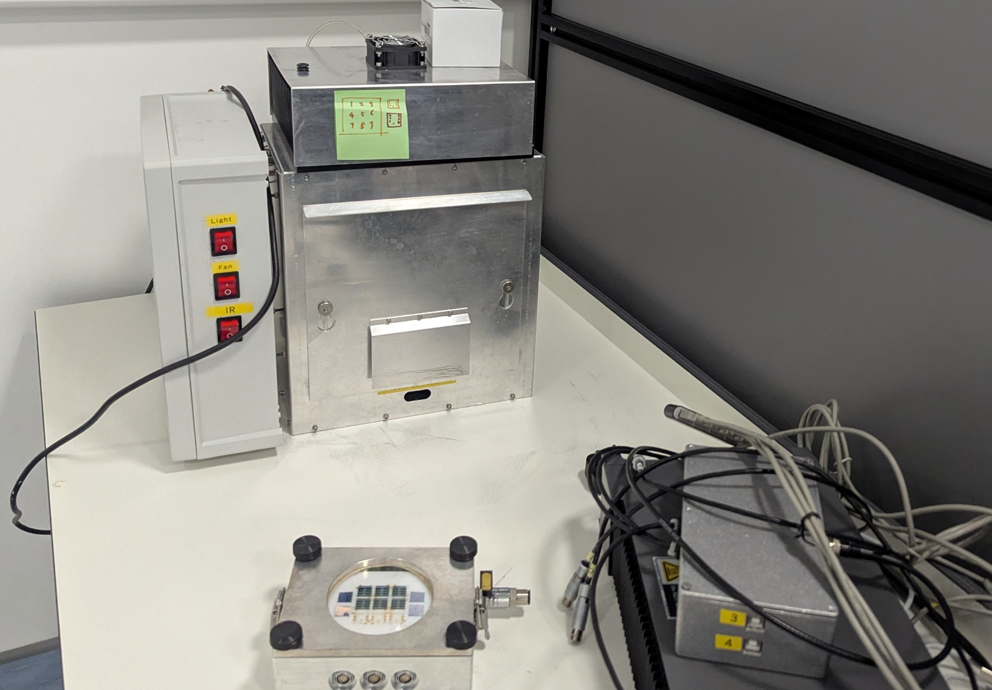
An in-house system in CRL B5 for stability measurements of photovoltaic devices:
- White-light LEDs + IR (1 Sun, 100 mW cm⁻²)
- Flowing N₂ in the measurement bay
- Keithley 2400 source measure units
- Multi-device sample chamber
- Python-based control software
UVvis Spectrometer
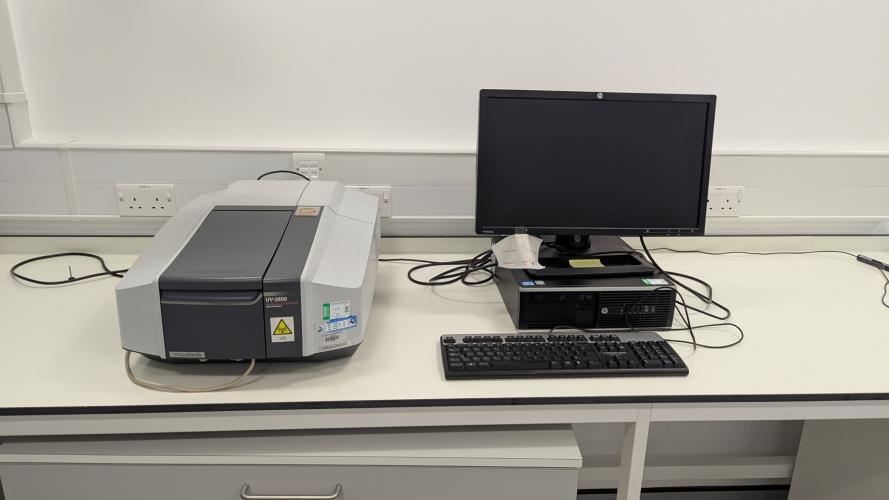
Shimadzu 2600 UVvis spectrometer for absorption and reflectance measurements of thin films and solutions.
Features:
- Transmission and reflection mode (with integrating sphere)
- Wavelength range: 1400 - 220 nm
- Resolution: 0.1 nm
- Accuracy: ± 0.3 nm
Transient Photocurrent
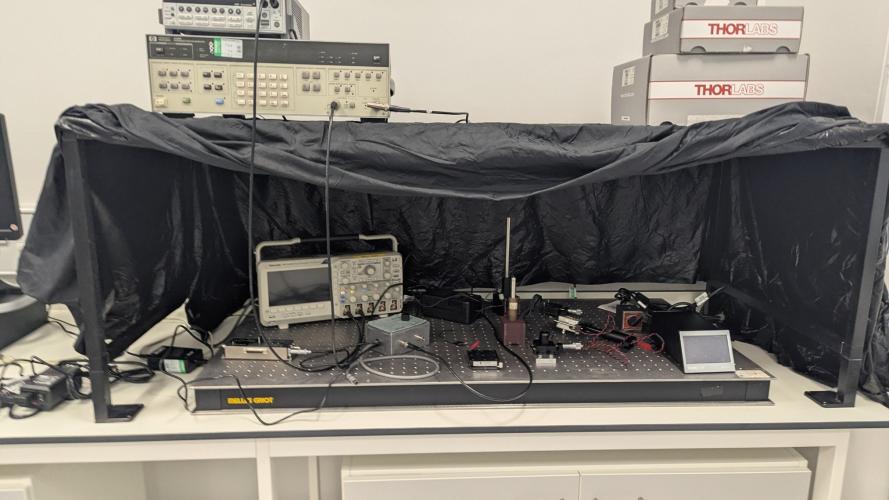
For TPC measurements and photodetector stability.
Features:
- Tektronix TDS3032B oscilloscope
- Red (633 nm) or green (523 nm) LD light sources with tuneable intensity. Rise/fall time of light sources ~800 ns
- Keithley 2400 SMU
- Stability measurements of photodetector devices
Applications in Our Research
Organic Photodetector Performance
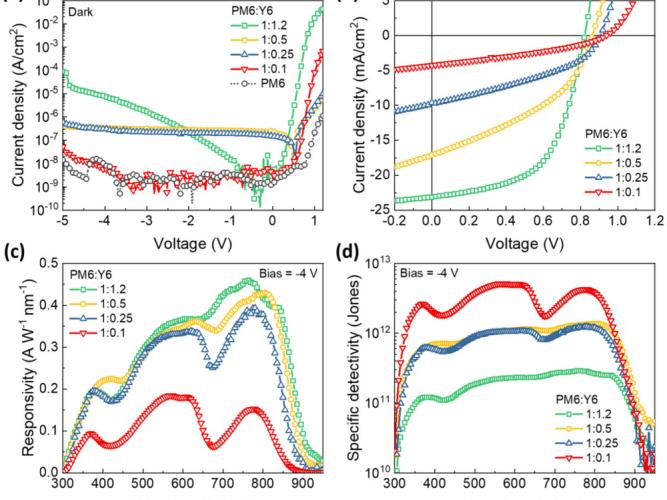
We can use a combination of External Quantum Efficiency (EQE) dark current measurements to determine the photodetector performence of organic photodetectors. This particular study shows how the effect of diluted the donor:acceptor ratio of to make a more donor -rich device results in faster photoresponse and poor short-circuit photocurrent generation is dramatically improved under reverse bias. In-depth photophysical and energetic analysis was then performed to reveal the origin of this high performance.
https://doi.org/10.1002/adom.202500255
Organic Photovoltaic Performance
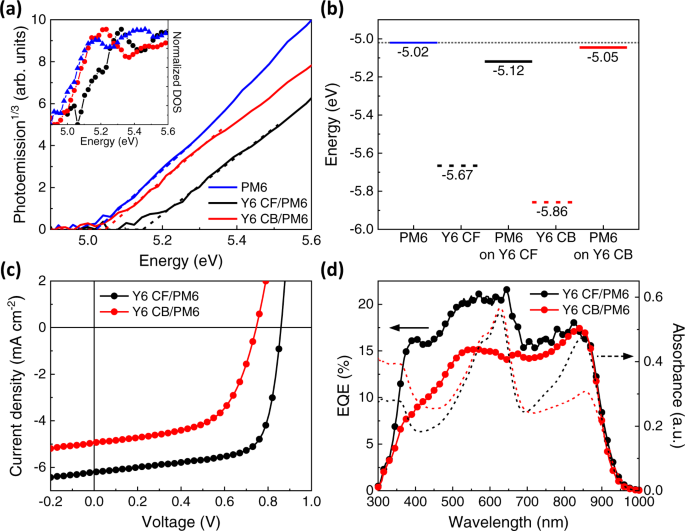
We can use a combination of UVvis absorption spectroscopy and solar simulation to link film properties to device performance. Here the orientation and morphology of Y6-films were studied using absorption and combined with OPV device performance to link important structure-property relationships.
Emissive State Exploration
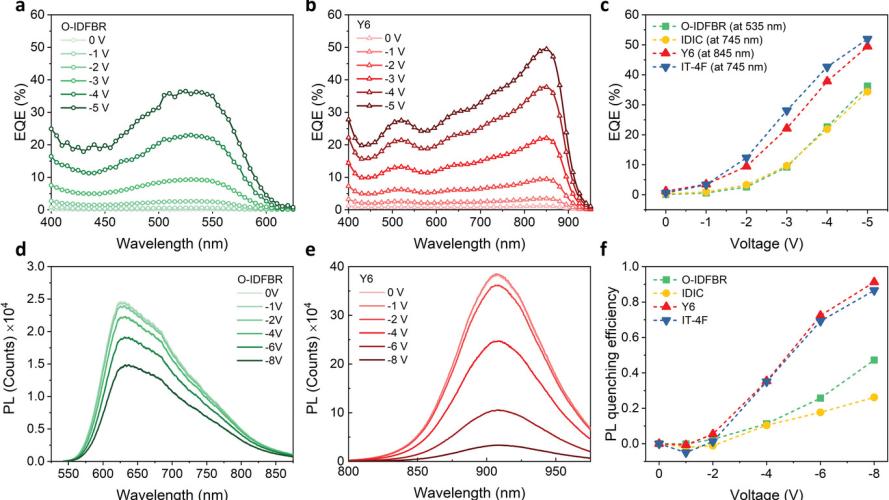
We can use photoluminescence (PL) spectroscopy to determine how emissive states are quenched with applied bias. This can give vital insight into device performance. Here we find strong emissive state quenching by electric field in addition to high quadrupole moments of these Non-Fulleren Acceptors (NFAs) result in excellent single-component OPD performances. This work opens a new way to realize efficient OPDs using single-component systems via solution-processing and provides important molecular design rules
Perovskite Photovoltaic Performance
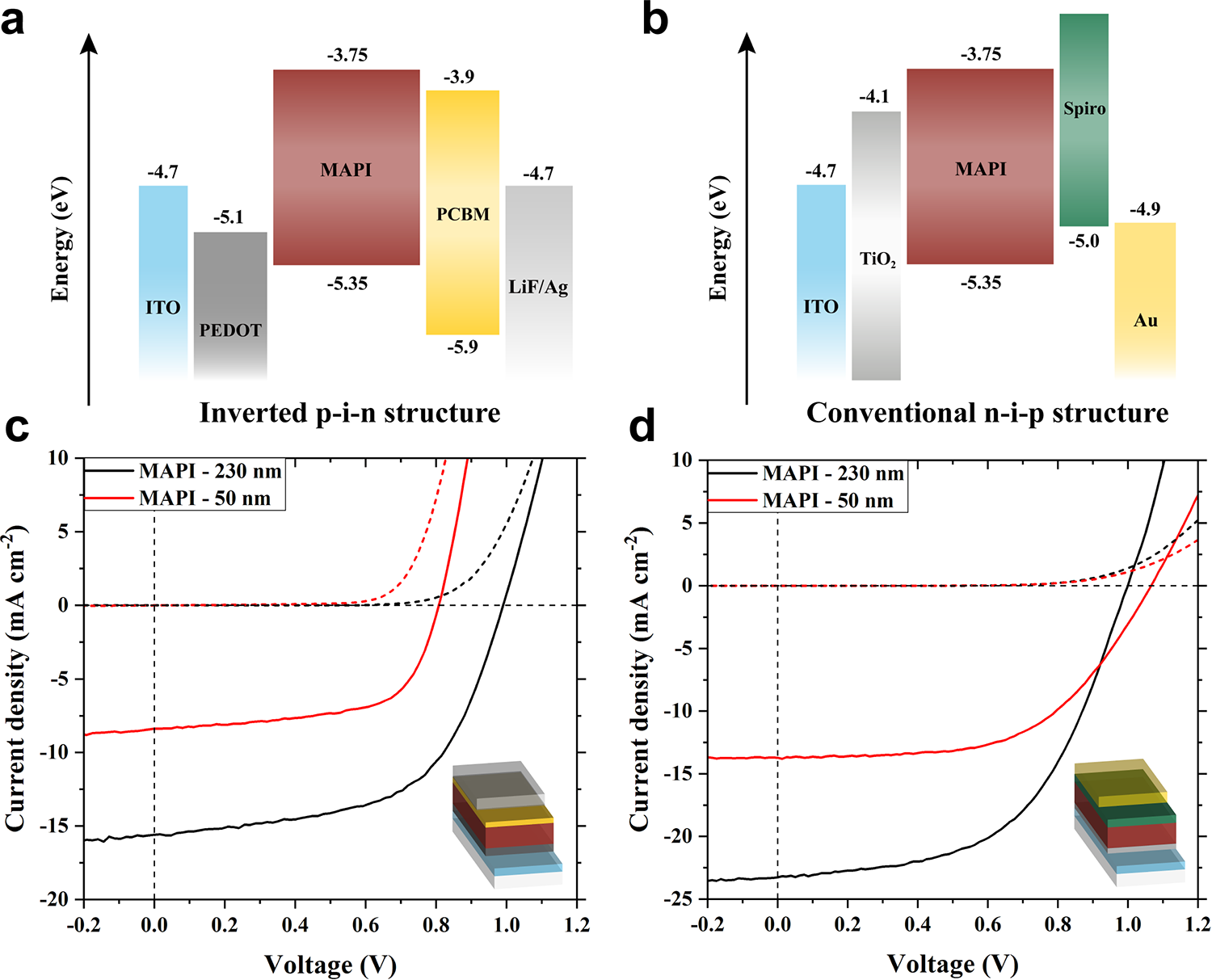
Understanding photovoltaic device performance relies on a fundamental understanding of the complex optoelectronic processes related to charge carrier generation, transport, extraction, and their loss mechanisms inside a device upon illumination. Our many optoelectronic techniques ranging from absorbance to transient photocurrent (TPC) measurements can help link these properties to device performance. In this study, we found a strong correlation between the thickness-dependent surface photovoltage and device performance, unravelling that the interfacial charge accumulation leads to charge carrier recombination and results in a large decrease in Voc, a key metric in photovoltaic device performance.