
Publications
Selected Publication: Organic Semiconductor Fundamentals
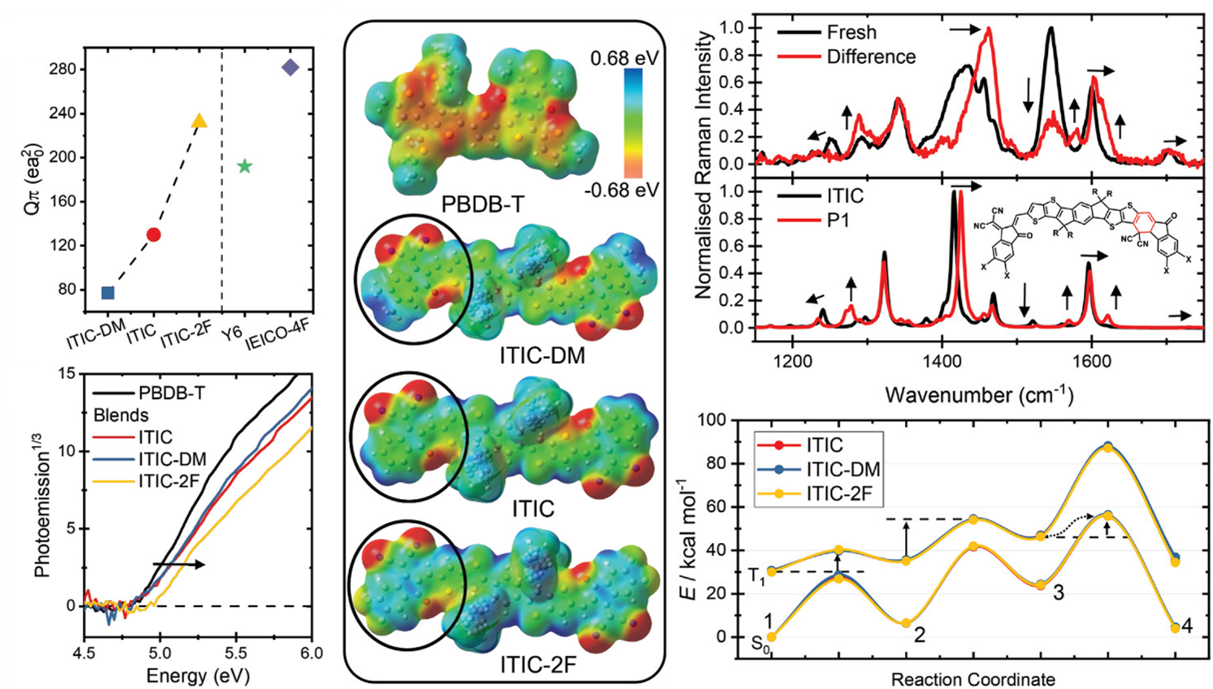
Molecular stability by quadrupole moment
The molecular quadrupole moment of non-fullerene acceptors strongly influences their photochemical and morphological stability by controlling intermolecular interactions. End-group fluorination increases the quadrupole moment and strengthens NFA-NFA and NFA-polymer interactions, resulting in improved photostability, whereas weaker quadrupole moments lead to faster degradation and poorer morphological stability.
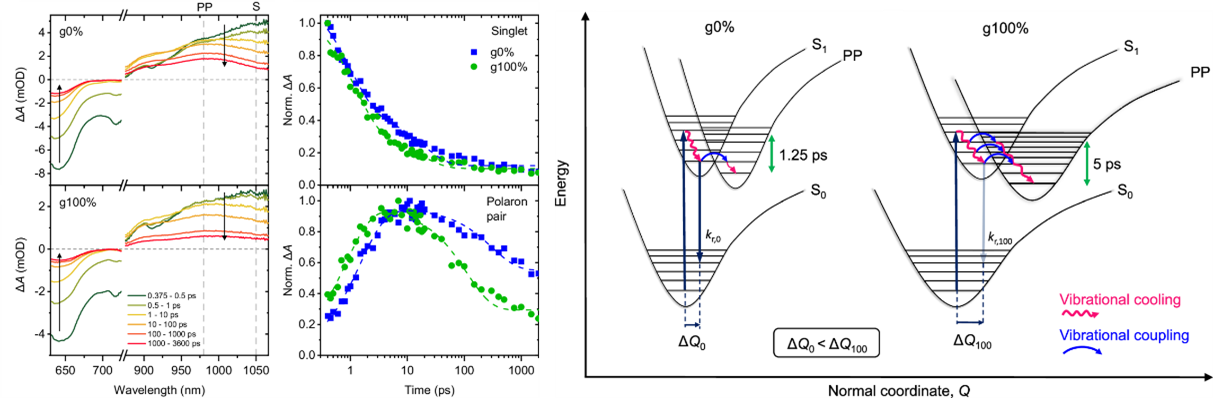
Side chain controlled excited state dynamics
Side-chain polarity and dielectric environment control the ultrafast excited-state dynamics of conjugated polymers. Increasing the polarity of glycolated side chains stabilized charge-separated polaron-pair states, while slow structural/vibrational relaxation of the polymer backbone facilitates their ultrafast formation following photoexcitation. Side-chain engineering can alter localization of π electrons and molecular reorganization, thereby controlling structural relaxation and photoinduced polaron-pair formation in conjugated polymers.
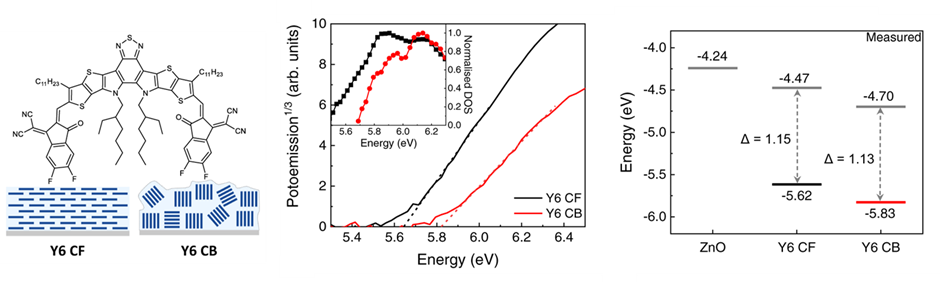
Energetic shifts with molecular orientation
Molecular orientation strongly influences the electronic energetics of Y6 non-fullerene acceptor, with face-on and edge-on orientation producing and shift in energy levels due to the molecule’s large quadrupole moment. These orientation-dependent energetic variations create local energy-level offsets between domains with different orientation, which affect charge generation and transport in organic photovoltaic devices.
Selected Publication: Organic Photoconversions
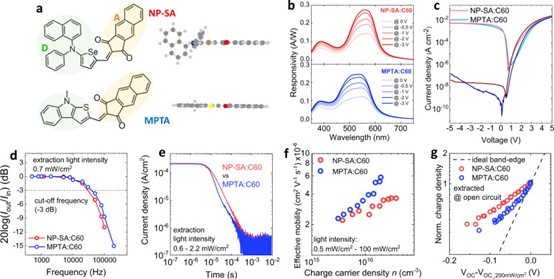
Molecular planarity and light-dependent trapping
The molecular origin of slow organic photodetector response, especially under low light, remained unclear. Comparing planar MPTA and twisted NP-SA donors blended with C₆₀, we show that the optimal design depends on light intensity. MPTA responds faster under high light owing to its narrow band-tail distribution. Under low light it is limited by deep traps, whereas NP-SA remains intensity-independent. We trace these traps to C₆₀ disrupting MPTA packing, leaving residual aggregates and possible MPTA–C₆₀ adducts.
Octupole-driven direct charge generation
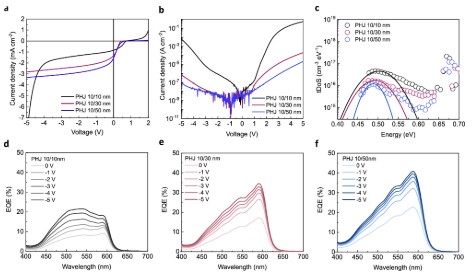
Short exciton diffusion lengths usually limit the useful layer thickness in planar-heterojunction photodetectors. We show that a high molecular octupole moment overcomes this by driving free charge generation within a single layer. In MPTA/Cl₆-SubPc devices, photocurrent arises mainly from sub-200 fs charge photogeneration within Cl₆-SubPc rather than at the interface. Our DFT calculations attribute this to its octupole moment (−80 D Ų), which creates local energetic offsets of ~200 meV. Thicker layers therefore raise photocurrent while lowering trap density and dark current.
Acceptor dilution for low dark current
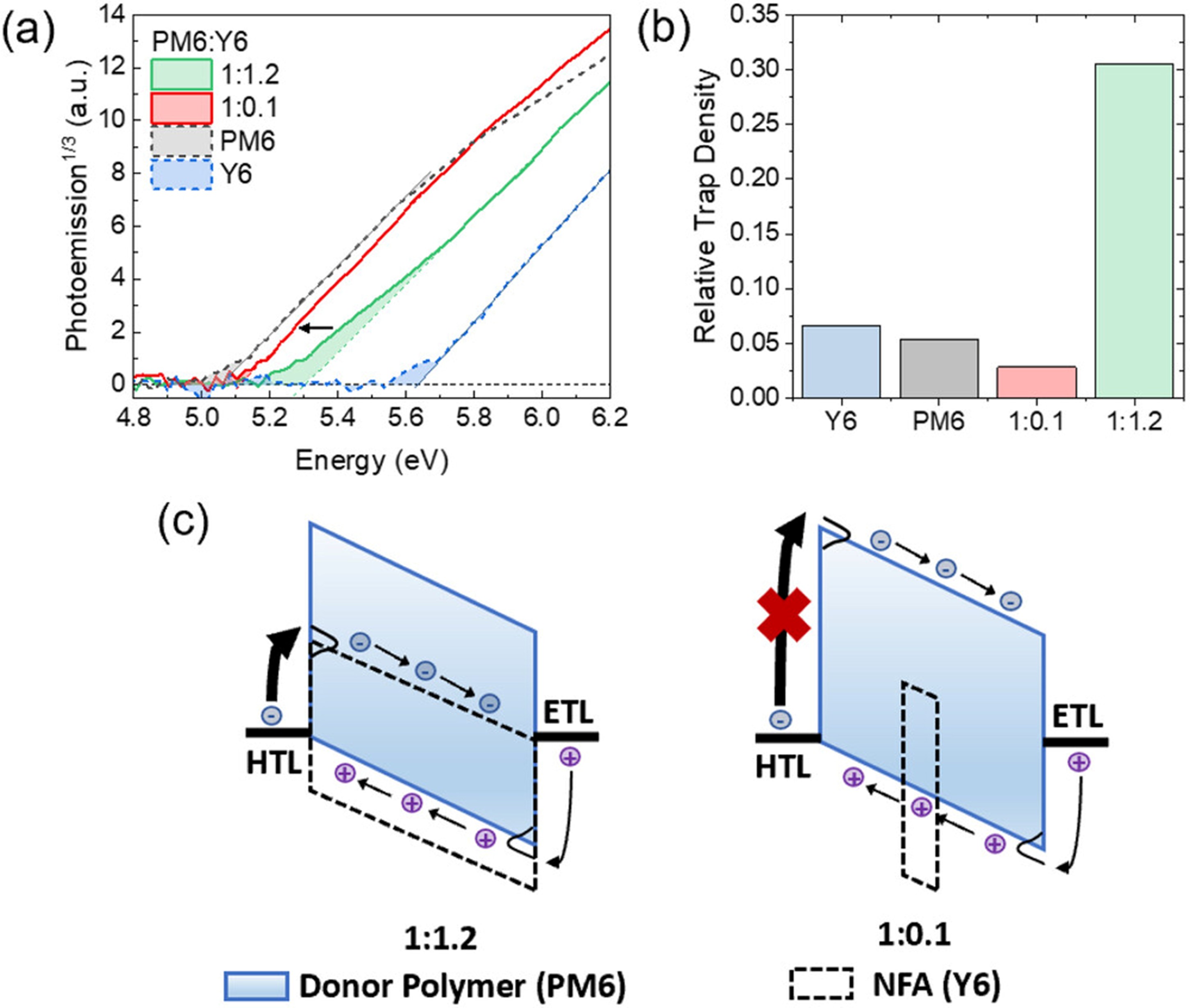
High dark current limits solution-processed organic photodetectors, particularly with crystalline acceptors such as Y6. We show that diluting the acceptor in a polymer-rich blend offers a simple remedy. Reducing the PM6:Y6 ratio from 1:1.2 to 1:0.1 lowers the dark current by three orders of magnitude, to 6.5 × 10⁻⁹ A cm⁻² at −4 V, with microsecond response times retained. The gain stems from disrupted Y6 crystallinity, fewer sub-gap traps and suppressed dark injection. The strategy is most effective for highly crystalline acceptors.
Selected Publication: Organic Transistors and Mixed-Conduction Materials
Spacer-decoupled mixed conduction
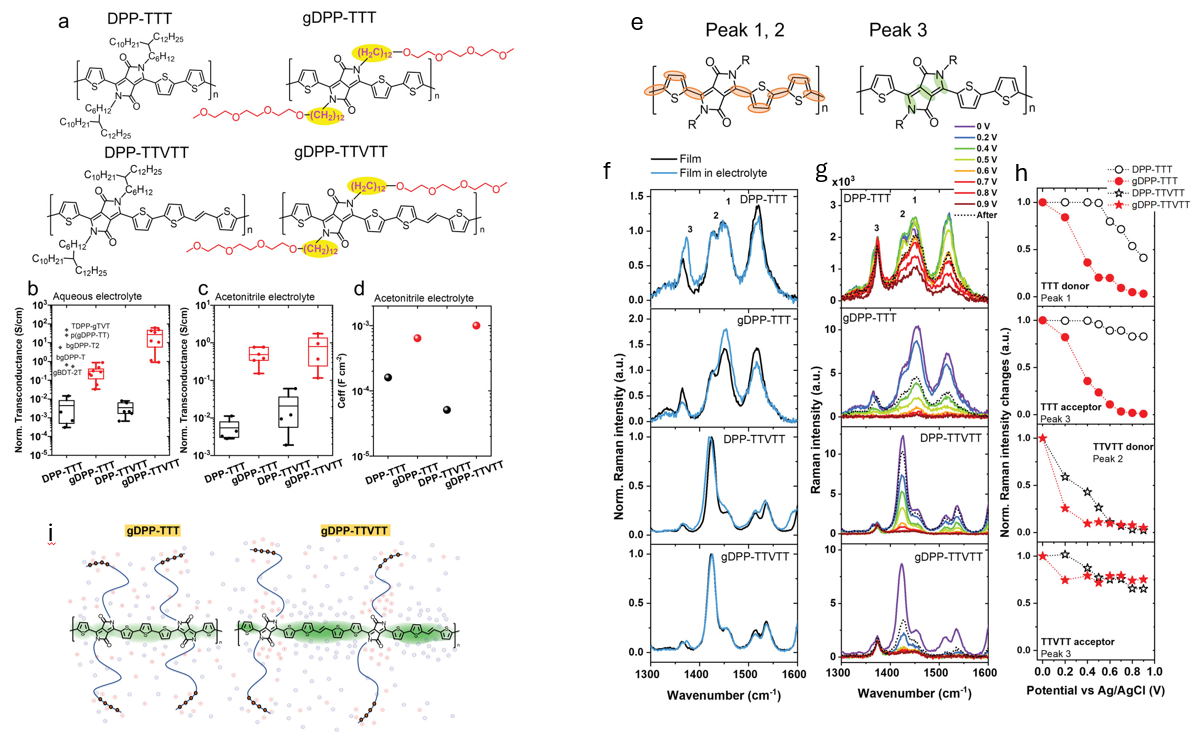
Glycol side chains raise ion uptake in organic electrochemical transistors but usually disorder the backbone and reduce hole mobility. We show that inserting a C₁₂ alkyl spacer between the glycol units and the DPP backbone overcomes this trade-off. Capacitance rises up to 20-fold and transconductance by 2–4 orders of magnitude, while edge-on packing and hole mobility are preserved. In situ Raman spectroscopy and MD simulations reveal that polarons in gDPP-TTVTT localise on the donor units, sparing the DPP acceptor and enabling 61.9 S cm⁻¹ with stable pulsed operation.
Stepwise polaron formation in polythiophenes
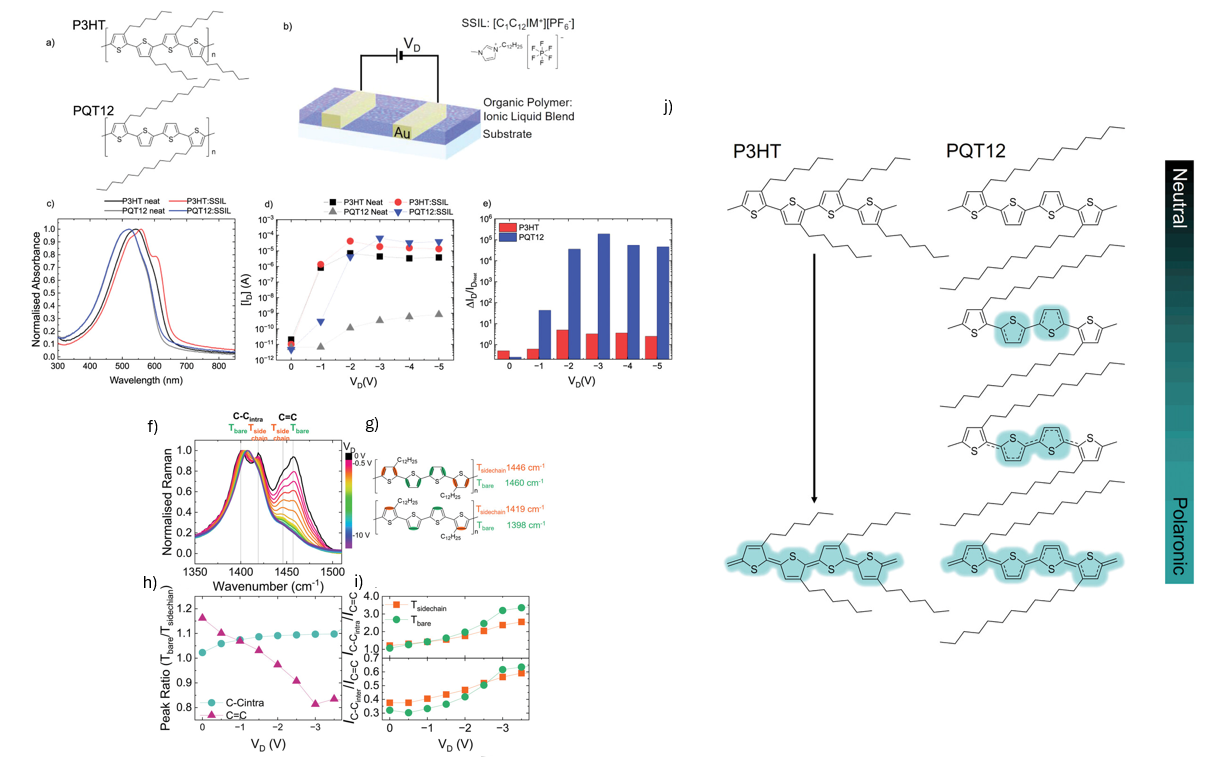
How molecular structure shapes polaron formation under operation had not been monitored directly. Using in situ electric-field-dependent Raman spectroscopy, we show that halving the side-chain density changes the formation pathway. P3HT forms polarons in a single step with large lattice distortion. PQT12 forms them stepwise, localising first on unsubstituted thiophene rings before delocalising along the backbone. This gives PQT12 a higher polaron density with less structural change. These localised polarons strengthen the gas-sensing response but lose P3HT’s polar/non-polar selectivity.
Side-chain and backbone control of DPP polarons
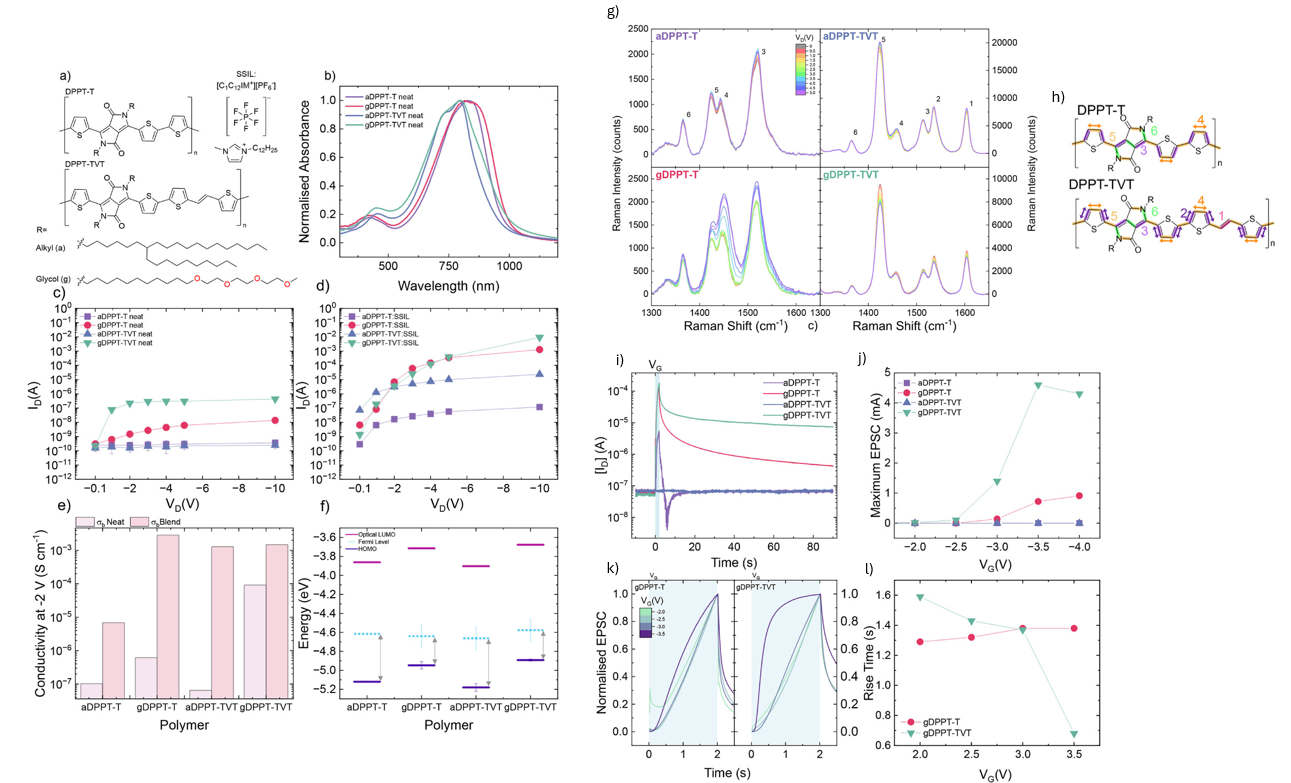
The effect of glycol side chains on solid-state charge density and polaron formation is often overlooked. We show that, in DPP polymers, glycolation shallows the HOMO and raises conductivity even without ions. Doping with a solid-state ionic liquid adds around four orders of magnitude. In situ Raman spectroscopy and DFT reveal localised polarons in DPPT-T but delocalised polarons along the more planar DPPT-TVT backbone. Accordingly, gDPPT-TVT delivers the largest post-synaptic current and longest retention in synaptic transistors.
Selected Publication: Perovskites and Hybrid Materials
Origin of Open-Circuit Voltage Losses
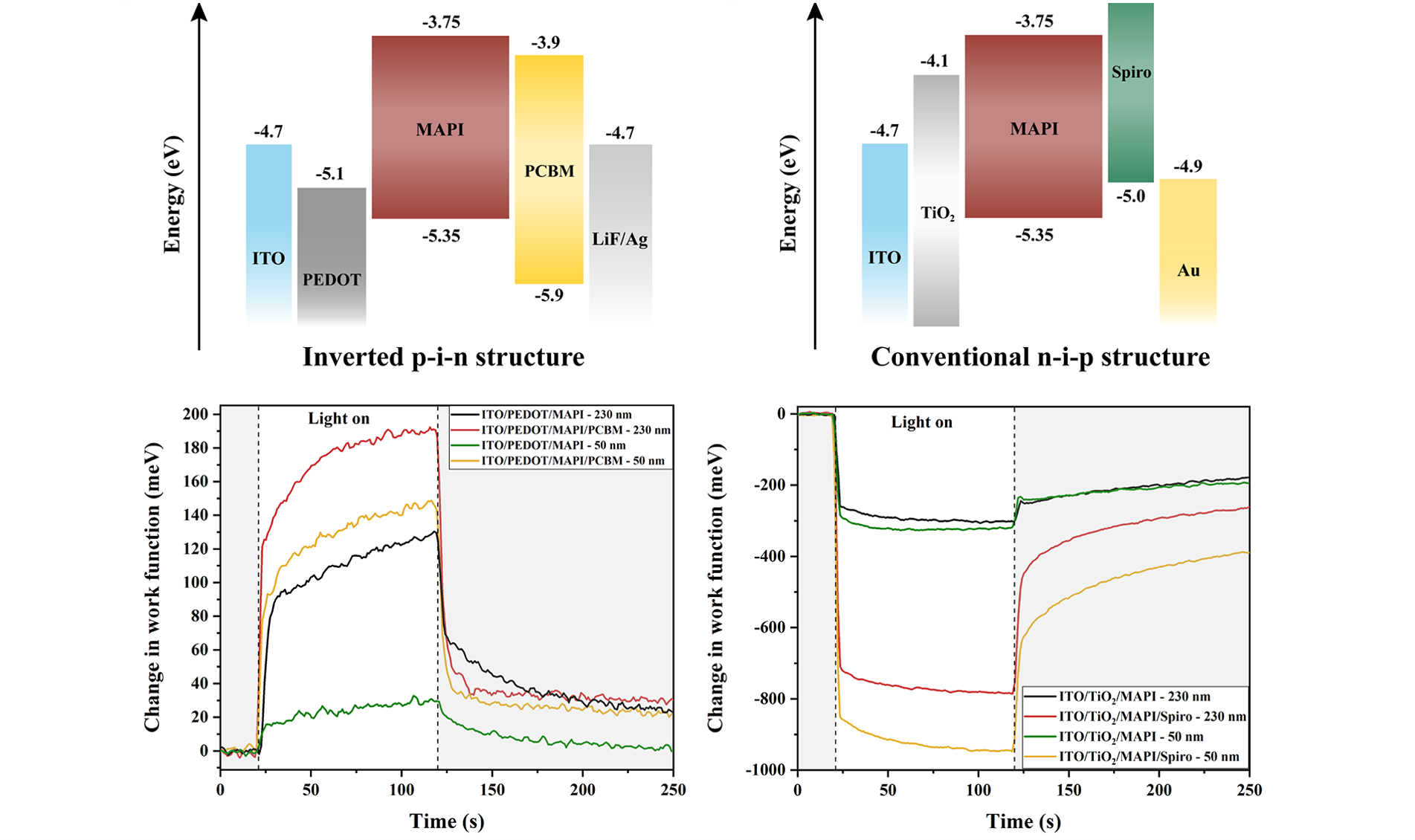
We report the important origin of Voc losses in methylammonium lead iodide perovskite (MAPI)-based solar cells, which results from undesirable positive charge (hole) accumulation at the interface between the perovskite photoactive layer and the poly(3,4-ethylenedioxythiophene):poly(styrenesulfonate) (PEDOT:PSS) hole-transport layer.
Suppressing Interfacial Recombination Loss
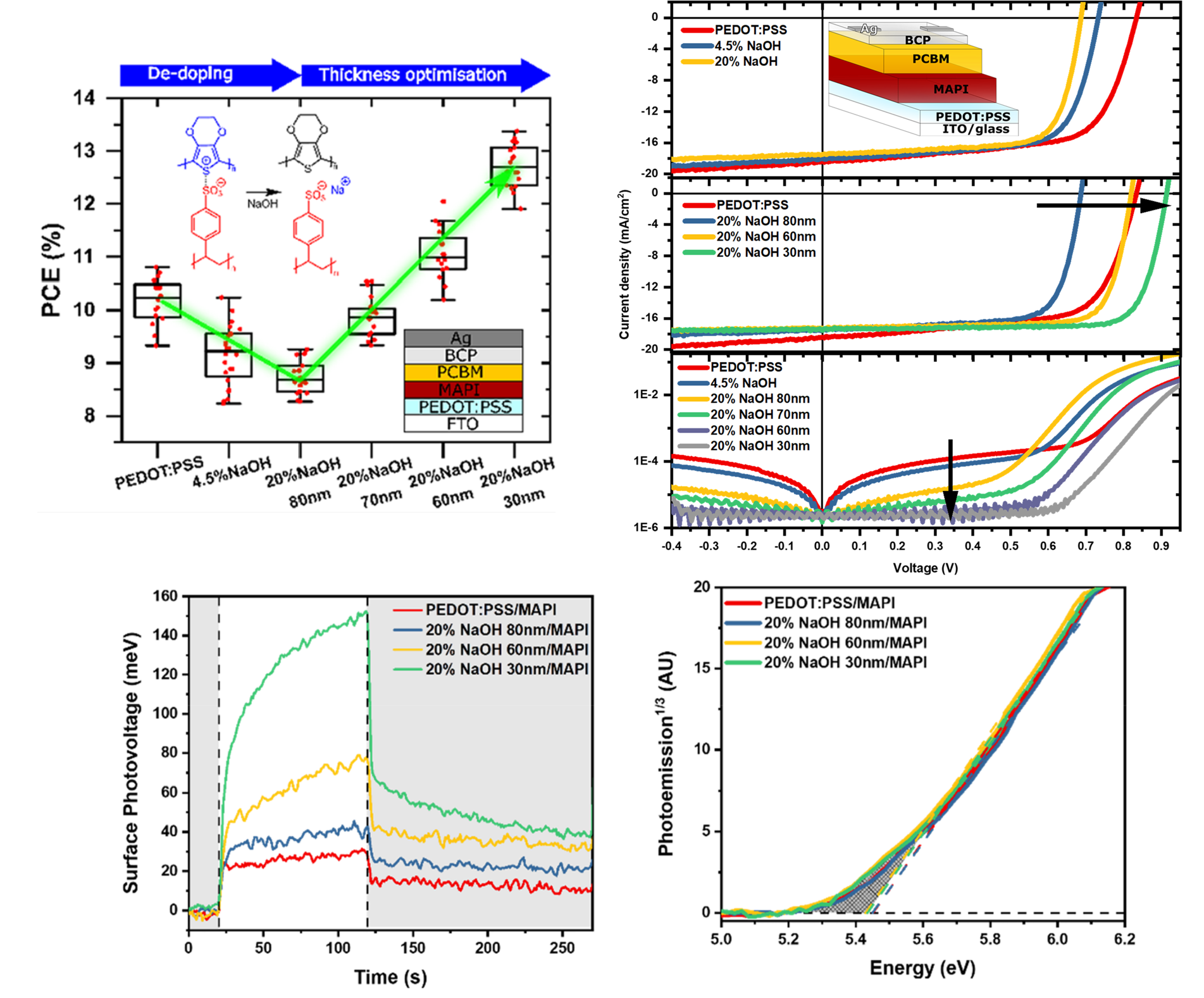
PSCs utilizing PEDOT:PSS suffer from strong recombination losses compared to other organic HTLs. We systematically dedope PEDOT:PSS with aqueous NaOH, raising its Fermi level by up to 500 meV, and optimize its layer thickness in p-i-n devices. A significant reduction of recombination losses at the dedoped PEDOT:PSS/perovskite interface is evidenced by a longer photoluminescence lifetime and higher magnitude of surface photovoltage, leading to an increased device VOC, fill factor, and PCE.
Nanoparticle-Mediated Interface Engineering
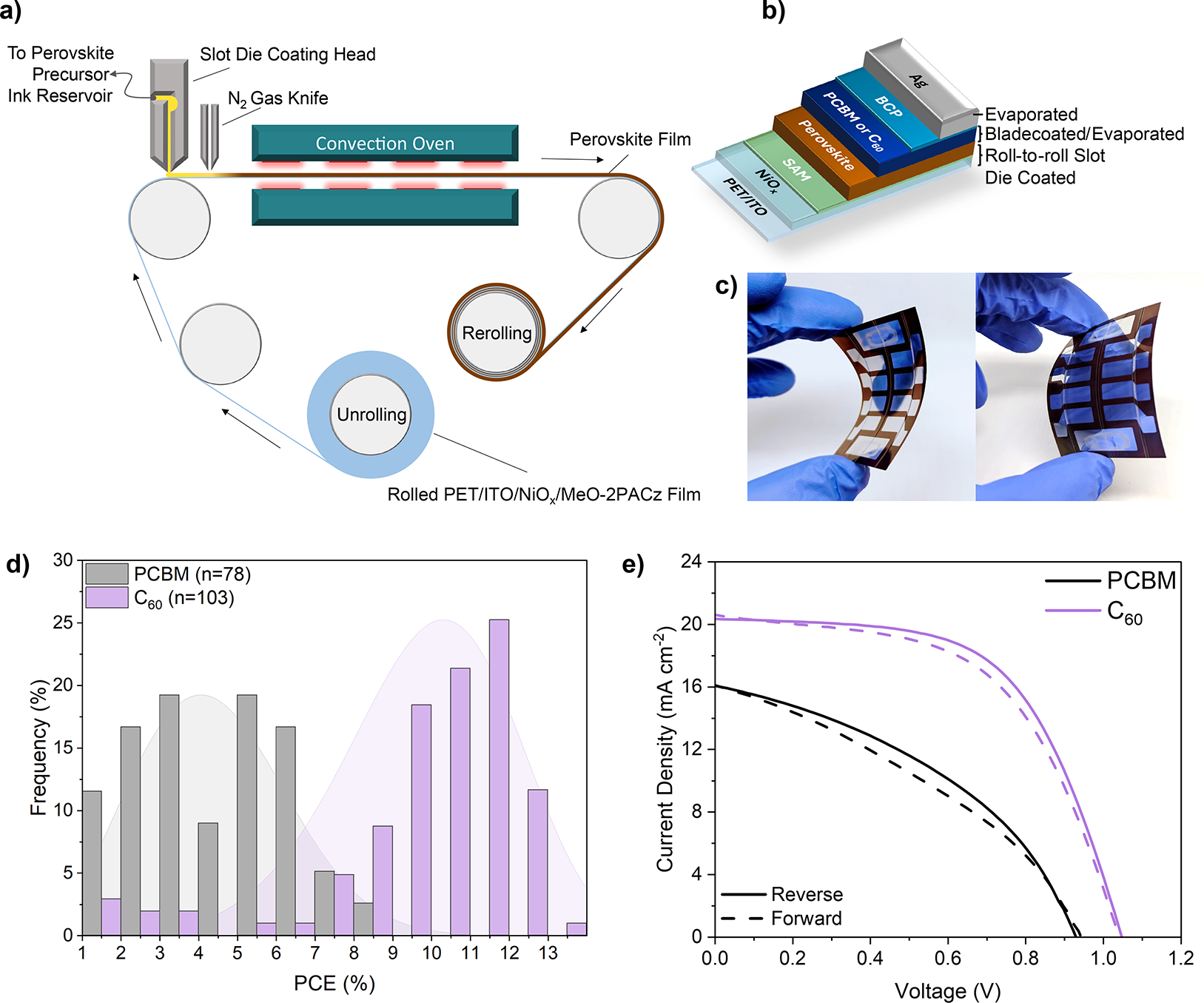
We show that printing interlayers of metal oxide nanoparticles, specifically Al2O3 and SnO2, can systematically control the morphology and interfacial energetics of solution-processed PC61BM electron transport layers (ETLs) in flexible roll-to-roll printed PSCs. These nanoparticle interlayers enhance ETL uniformity, reduce pinholes, and increase shunt resistance, improving power conversion efficiencies (PCEs) and reducing device failure rates by 50%.
Publication List
Yang EJ, Park SY, Qiu VY, Kim J-S. (2026). Free Charge Generation in Organic Photoconversion Devices–the Impact of Electrostatic Potentials. Advanced Energy Materials. https://doi.org/10.1002/aenm.71553
Casabona-Cendra L, Martínez-Domingo C, Qiu VY, Dong X, Kos D, Riera-Galindo S, Campoy-Quiles M, Kim J-S, Mas-Torrent M. (2026). Crystallinity Effects on Near-Infrared Photoresponse in Y6-Based Organic Phototransistors. Small. https://doi.org/10.1002/smll.75942
Yang EJ, Park SY, Qiu VY, Kim J-S. (2026). Free Charge Generation in Organic Photoconversion Devices–the Impact of Electrostatic Potentials. Advanced Energy Materials. https://doi.org/10.1002/aenm.71553
Lewis BF, Mallia G, Lan T, Tillotson E, Chen M, Zhang H, Southouse J, Haigh SJ, Harrison NM, Kim J-S, Eslava S. (2026). Solution-processed La-substituted Ba2Bi2O6 photocathodes with enhanced photoelectrochemical activity: a combined experimental and computational study. Materials Advances. https://doi.org/10.1039/d5ma01435b
Kusber A, Sun Y, Wolansky J, Winkler LC, Hofmann AL, Kretschmer F, Chandran HT, Zhang T, Hambsch M, Mannsfeld SCB, Leo K, Kim J-S, Benduhn J. (2026). The Role of Ultra-Thin Buffer Layers for Achieving Ultra-Low Dark Currents in Single-Component Organic Photodetectors. Advanced Functional Materials. https://doi.org/10.1002/adfm.202600043
Daboczi M, Al Lawati N, Stewart K, Zhi M, Müller JS, Kim J-S, Nelson J, Eisner F, Eslava S. (2026). PTQ10:L8-BO organic photoactive layers enable improved stability for solar water oxidation and enhanced unassisted water splitting. EES Solar. https://doi.org/10.1039/d6el00052e
Stewart K, Tan E, Kim J, Kim Y-H, Kim J-S. (2026). Polarons in DPP Polymers – How Glycol Side Chains and Elongated Conjugated Backbone Influence the Formation and Transport. Advanced Electronic Materials. https://doi.org/10.1002/aelm.202500731
Henderson C, Marques AS, Bicalho IS, Hart LJF, Monahan A, Stewart K, Asano K, Lan T, Vacha M, Stevens MM, Barnes PRF, Bagnis D, Kim J-S. (2026). Nanoparticle-mediated interface engineering for uniform, reproducible electron transport layers in scalable perovskite solar cells. ACS Applied Materials & Interfaces. https://doi.org/10.1021/acsami.5c24295
Luke J, Chen S, He Q, Rimmele M, Marsh AV, Gillett AJ, Kafourou P, Fei Z, Heeney M, Kim J-S. (2026). Don't fluorinate there! The impact of fluorination position on polymer photostability and its effect on photovoltaic device stability. EES Solar. https://doi.org/10.1039/d5el00166h
Park SY, Labanti C, Fang F, Rana A, Yang EJ, Dong Y, Park J-I, Shin J, Park K-B, Yun S, Durrant JR, Kim J-S. (2025). Efficient Non-Fullerene Acceptor-Based Organic Photodetectors Achieved by Reduced Deep Traps in Highly Intermixed Co-Evaporated Bulk-Heterojunction Blends. Advanced Optical Materials. https://doi.org/10.1002/adom.202501433
Su R, Chai J, Pei Y, Olanrewaju Y, Yan L, Neu J, Mauthe J, Stewart K, Kashani S, Chaturvedi N, Nikodemski S, Vella JH, Amassian A, Ginger DS, Kim J-S, Ade H, You W, So F. (2025). Two-Stage Bipolaron Formation in Molecularly Doped Conjugated Polymers. Advanced Materials. https://doi.org/10.1002/adma.202504357
Labanti C, Sun Y, Luke J, Dong Y, Park SY, Chin Y-C, Lan T, Yang EJ, Zhang L, Gonzalez-Carrero S, Durrant JR, Kim J-S. (2025). Breaking Crystallinity for Optimal Dark Current: Nonfullerene Acceptor Dilution as a Strategy for High-Performance Organic Photodetectors. Advanced Optical Materials. https://doi.org/10.1002/adom.202500255
Forrester C, Augurio A, Henderson C, Kim J-S, Durrant JR, Briscoe J. (2025). Illuminating the Origins of Ferroelectric-Induced Photocurrent and Hole Lifetime Enhancement in BaTiO3 Photoanodes. Advanced Functional Materials. https://doi.org/10.1002/adfm.202503119
Lukas T, Seo S, Holzhey P, Stewart K, Henderson C, Wagner L, Beynon D, Watson TM, Kim J-S, Kohlstädt M, Snaith HJ. (2025). Charge Extraction Multilayers Enable Positive-Intrinsic-Negative Perovskite Solar Cells with Carbon Electrodes. ACS Energy Letters. https://doi.org/10.1021/acsenergylett.4c03403
Lambeva NT, Limbu S, Kim J-S, Bradley DDC. (2025). Fluorene-Arylamine Copolymers: Separable Control of Hole Transport and Light Emission Through Composition and Conformation. Journal of Polymer Science. https://doi.org/10.1002/pol.20250063
Daboczi M, Eisner F, Luke J, Yuan SW, Lawati NA, Zhi M, Yang M, Müller JS, Stewart K, Kim J-S, Nelson J, Eslava S. (2025). Enhanced solar water oxidation and unassisted water splitting using graphite-protected bulk heterojunction organic photoactive layers. Nature Energy. https://doi.org/10.1038/s41560-025-01736-6
Fu Y, Xu L, Li Y, Yang EJ, Guo Y, Cai G, Chan PF, Ke Y, Su C-J, Jeng U-S, Chow PCY, Kim J-S, Tang M-C, Lu X. (2024). Enhancing inter-domain connectivity by reducing fractal dimensions: the key to passivating deep traps in organic photovoltaics. Energy & Environmental Science. https://doi.org/10.1039/d4ee02961e
Zhang L, Lee S, Park SY, Sandberg OJ, Yang EJ, Meredith P, Kim Y-H, Kim J-S. (2024). High Thickness Tolerance in All-Polymer-Based Organic Photovoltaics Enables Efficient and Stable In-Door Operation. Advanced Science. https://doi.org/10.1002/advs.202408181
Alsufyani M, Moss B, Tait CE, Myers WK, Shahi M, Stewart K, Zhao X, Rashid RB, Meli D, Wu R, Paulsen BD, Thorley K, Lin Y, Combe C, Kniebe-Evans C, Inal S, Jeong SY, Woo HY, Ritchie G, Kim J-S, Rivnay J, Paterson A, Durrant JR, McCulloch I. (2024). The Effect of Organic Semiconductor Electron Affinity on Preventing Parasitic Oxidation Reactions Limiting Performance of n-Type Organic Electrochemical Transistors. Advanced Materials. https://doi.org/10.1002/adma.202403911
Yang EJ, Luke J, Fu Y, Qiao Z, Bidwell M, Marsh AV, Heeney M, Gasparini N, Kim J-S. (2024). Unraveling the Impact of Solution Filtration on Organic Solar Cell Stability. Advanced Functional Materials. https://doi.org/10.1002/adfm.202406941
Blakesley JC. (2024). Roadmap on established and emerging photovoltaics for sustainable energy conversion. JPhys Energy. https://doi.org/10.1088/2515-7655/ad7404
Pagano K, Kim JG, Luke J, Tan E, Stewart K, Sazanovich I, Karras G, Gonev H, Marsh A, Kim NY, Kwon S, Kim YY, Alonso M, Dorling B, Campoy-Quiles M, Parker A, Clarke T, Kim Y-H, Kim J-S. (2024). Slow vibrational relaxation drives ultrafast formation of photoexcited polaron pair states in glycolated conjugated polymers. Nature Communications. https://doi.org/10.1038/s41467-024-50530-7
Rana A, Park SY, Labanti C, Fang F, Yun S, Dong Y, Yang EJ, Nodari D, Gasparini N, Park J-I, Shin J, Minami D, Park K-B, Kim J-S, Durrant JR. (2024). Octupole moment driven free charge generation in partially chlorinated subphthalocyanine for planar heterojunction organic photodetectors. Nature Communications. https://doi.org/10.1038/s41467-024-49169-1
Di Mari G, Yao C, Lan T, Liu S, Mineo G, Strano V, Bruno E, Kim J-S, Mirabella S, Torrisi F. (2024). Advanced pseudocapacitive performances of a Ti3C2Tx-ZnOHF/ZnO nanocomposite for energy storage applications. ChemSusChem. https://doi.org/10.1002/cssc.202500024
Stewart K, Pagano K, Tan E, Daboczi M, Rimmele M, Luke J, Eslava S, Kim J-S. (2024). Understanding effects of alkyl side-chain density on polaron formation via electrochemical doping in thiophene polymers. Advanced Materials. https://doi.org/10.1002/adma.202211184
Wu D-T, Zhu W-X, Dong Y, Daboczi M, Ham G, Hsieh H-J, Huang C-J, Xu W, Henderson C, Kim J-S, Eslava S, Cha H, Macdonald TJ, Lin C-T. (2024). Enhancing the efficiency and stability of tin-lead perovskite solar cells via sodium hydroxide dedoping of PEDOT. Small Methods. https://doi.org/10.1002/smtd.202400302
Clarke AJ, Yang EJ, Thomas SK, Lee HKH, Hunter A, Lan W, Carnie MJ, Kim J-S, Tsoi WC. (2024). Investigating the Photostability of Organic Photovoltaics for Indoor and Outdoor Applications. Advanced Energy and Sustainability Research. https://doi.org/10.1002/aesr.202300285
Park SY, Labanti C, Pacalaj RA, Lee TH, Dong Y, Chin Y-C, Luke J, Ryu G, Minami D, Yun S, Park J-I, Fang F, Park K-B, Durrant JR, Kim J-S. (2023). The state-of-the-art solution-processed single component organic photodetectors achieved by strong quenching of intermolecular emissive state and high quadrupole moment in non-fullerene acceptors. Advanced Materials. https://doi.org/10.1002/adma.202306655
Yan H, Cong S, Daboczi M, Limbu S, Hamilton I, Kwon S, Rapley CL, Tahir SM, Kerherve G, Payne D, Heeney M, Kim J-S. (2023). Ionic density control of conjugated polyelectrolytes via postpolymerization modification to enhance hole-blocking property for highly efficient PLEDs with fast response times. Advanced Optical Materials. https://doi.org/10.1002/adom.202300988
Henderson C, Luke J, Bicalho I, Correa L, Yang E, Rimmele M, Demetriou H, Heutz S, Gasparini N, Heeney M, Bagnis D, Kim J-S. (2023). Charge transfer complex formation between organic interlayers drives light-soaking in large area perovskite solar cells. Energy and Environmental Science. https://doi.org/10.1039/D3EE02571C
Yang M, Cui J, Daboczi M, Law RV, Luke J, Kim J-S, Hankin A, Eslava S. (2023). Interplay between Collective and Localized Effects of Point Defects on Photoelectrochemical Performance of TiO2 Photoanodes for Oxygen Evolution. Advanced Materials Interfaces. https://doi.org/10.1002/admi.202300595
Luke J, Yang EJ, Labanti C, Park SY, Kim J-S. (2023). Key molecular perspectives for high stability in organic photovoltaics. Nature Reviews Materials. https://doi.org/10.1038/s41578-023-00606-5
Wang Y, Daboczi M, Zhang M, Briscoe J, Kim J-S, Yan H, Dunn S. (2023). Origin of the switchable photocurrent direction in BiFeO3 thin films. Materials Horizons. https://doi.org/10.1039/D3MH01510F
Hart LJF, Gruene J, Liu W, Lau T-K, Luke J, Chin Y-C, Jiang X, Zhang H, Sowood DJC, Unson DML, Kim J-S, Lu X, Zou Y, Gao F, Sperlich A, Dyakonov V, Yuan J, Gillett AJJ. (2023). Understanding the Role of Triplet-Triplet Annihilation in Non-Fullerene Acceptor Organic Solar Cells. Advanced Energy Materials. https://doi.org/10.1002/aenm.202301357
Jiang Z, Du T, Lin C, Macdonald TJ, Chen J, Chin Y, Xu W, Ding B, Kim J, Durrant JR, Heeney M, McLachlan MA. (2023). Deciphering the role of hole transport layer HOMO level on the open circuit voltage of perovskite Solar cells. Advanced Materials Interfaces. https://doi.org/10.1002/admi.202201737
Jeong S, Rana A, Kim J-H, Qian D, Park K, Jang J-H, Luke J, Kwon S, Kim J, Tuladhar PS, Kim J-S, Lee K, Durrant JR, Kang H. (2023). New ternary blend strategy based on a vertically self-assembled passivation layer enabling efficient and photostable inverted organic solar cells. Advanced Science. https://doi.org/10.1002/advs.202206802
Mohapatra AA, Pranav M, Yadav S, Gangadharappa C, Wu J, Labanti C, Wolansky J, Benduhn J, Kim J-S, Durrant J, Patil S. (2023). Interface engineering in perylene diimide-based organic photovoltaics with enhanced photovoltage. ACS Applied Materials and Interfaces. https://doi.org/10.1021/acsami.3c02003
Motai K, Koishihara N, Narimatsu T, Ohtsu H, Kawano M, Wada Y, Akisawa K, Okuwaki K, Mori T, Kim J-S, Mochizuki Y, Hayamizu Y. (2023). Bifurcated Hydrogen Bonds in a Peptide Crystal Unveiled by X-ray Diffraction and Polarized Raman Spectroscopy. Crystal Growth & Design.
Fu Y, Lee TH, Chin Y-C, Pacalaj RA, Labanti C, Park SY, Dong Y, Cho HW, Kim JY, Minami D, Durrant JR, Kim J-S. (2023). Molecular orientation-dependent energetic shifts in solution-processed non-fullerene acceptors and their impact on organic photovoltaic performance. Nature Communications. https://doi.org/10.1038/s41467-023-37234-0
Wang Y, Luke J, Privitera A, Rolland N, Labanti C, Londi G, Lemaur V, Toolan DTW, Sneyd AJ, Jeong S, Qian D, Olivier Y, Sorace L, Kim J-S, Beljonne D, Li Z, Gillett AJ. (2023). The critical role of the donor polymer in the stability of high-performance non-fullerene acceptor organic solar cells. Joule. https://doi.org/10.1016/j.joule.2023.03.002
Kim J-S. (2023). Key Impact of Molecular Structure and Orientation of Non-Fullerene Acceptors on Organic Photoconversion Devices. Conference paper.
Luke J, Jo Y-R, Lin C-T, Hong S, Balamurugan C, Kim J, Park B, Lee K, Durrant JR, Kwon S, Kim B-J, Kim J-S. (2022). The molecular origin of high performance in ternary organic photovoltaics identified using a combination of in situ structural probes. Journal of Materials Chemistry A. https://doi.org/10.1039/d2ta07209b
Lee TH, Dong Y, Pacalaj RA, Park SY, Xu W, Kim J-S, Durrant JR. (2022). Organic Planar Heterojunction Solar Cells and Photodetectors Tailored to the Exciton Diffusion Length Scale of a Non-Fullerene Acceptor. Advanced Functional Materials. https://doi.org/10.1002/adfm.202208001
Cui J, Daboczi M, Regue M, Chin Y, Pagano K, Zhang J, Isaacs MA, Kerherve G, Mornto A, West J, Gimenez S, Kim J, Eslava S. (2022). 2D bismuthene as a functional interlayer between BiVO4 and NiFeOOH for enhanced oxygen-evolution photoanodes. Advanced Functional Materials. https://doi.org/10.1002/adfm.202207136
Guder F, Alshabouna F, Gonzalez-Macia L, Kim J-S, Asfour T, Lee HS, Tan E, Nunez-Bajo E, Cotur Y, Coatsworth P, Barandun G. (2022). PEDOT cotton conductive thread for mass manufacturing of textile-based electrical wearable sensors by computerized embroidery. Materials Today. https://doi.org/10.1016/j.mattod.2022.07.015
Lee J, Luke J, Ahn H, Kim D, Jin C-H, Kim MH, Won YS, Yoon M, Kim J-S. (2022). Efficient Charge Transport Driven by Strong Intermolecular Interactions in Cyclopentadithiophene-Based Donor-Acceptor Type Conjugated Copolymers. Advanced Electronic Materials. https://doi.org/10.1002/aelm.202200081
Lan T, Deng X, Wang Q, Huang Y, Liu C, Sun Z, Xie Y, Zhang P. (2022). Doped Graphene Aerogels Decorated by MoS2 Nanoflowers for Steam Generation under Low Solar Flux. ACS Applied Nano Materials. https://doi.org/10.1021/acsanm.2c01224
Tan E, Kim J, Stewart K, Pitsalidis C, Kwon S, Siemons N, Kim J, Jiang Y, Frost JM, Pearce D, Tyrrell JE, Nelson J, Owens RM, Kim Y-H, Kim J-S. (2022). The role of long-alkyl-group spacers in glycolated copolymers for high performance organic electrochemical transistors. Advanced Materials. https://doi.org/10.1002/adma.202202574
Wang B, Nam S, Limbu S, Kim J-S, Riede M, Bradley DDC. (2022). Properties and Applications of Copper(I) Thiocyanate Hole-Transport Interlayers Processed from Different Solvents. Advanced Electronic Materials. https://doi.org/10.1002/aelm.202101253
Yan H, Wade J, Wan L, Kwon S, Fuchter MJ, Campbell AJ, Kim J-S. (2022). Enhancing hole carrier injection via low electrochemical doping on circularly polarized polymer light-emitting diodes. Journal of Materials Chemistry C. https://doi.org/10.1039/d2tc01010k
Labanti C, Wu J, Shin J, Limbu S, Yun S, Fang F, Park SY, Heo C-J, Lim Y, Choi T, Kim H-J, Hong H, Choi B, Park K-B, Durrant J, Kim J-S. (2022). Light-intensity dependent photoresponse time of organic photodetectors and its molecular origin. Nature Communications. https://doi.org/10.1038/s41467-022-31367-4
Luke J, Yang EJ, Chin Y-C, Che Y, Winkler L, Whatling D, Labanti C, Park SY, Kim J-S. (2022). Strong intermolecular interactions induced by high quadrupole moments enable excellent photostability of non-fullerene acceptors for organic photovoltaics. Advanced Energy Materials. https://doi.org/10.1002/aenm.202201267
Hamilton I, Suh M, Bailey J, Bradley DDC, Kim J-S. (2022). Optimizing interfacial energetics for conjugated polyelectrolyte electron injection layers in high efficiency and fast responding polymer light emitting diodes. ACS Applied Materials and Interfaces. https://doi.org/10.1021/acsami.2c05640
Lee HKH, Stewart K, Hughes D, Barbe J, Pockett A, Kilbride RC, Heasman KC, Wei Z, Watson TM, Carnie MJ, Kim J-S, Tsoi WC. (2022). Proton radiation hardness of organic photovoltaics: an in-depth study. Solar RRL. https://doi.org/10.1002/solr.202101037
Yan H, Tseng T-W, Omagari S, Hamilton I, Nakamura T, Vacha M, Kim J-S. (2022). Dynamic molecular conformational change leading to energy transfer in F8-5% BSP copolymer revealed by single-molecule spectroscopy. Journal of Chemical Physics. https://doi.org/10.1063/5.0080406
Marin-Beloqui J, Zhang G, Guo J, Shaikh J, Wohrer T, Hosseini SM, Sun B, Shipp J, Auty AJ, Chekulaev D, Ye J, Chin Y-C, Sullivan MB, Mozer AJ, Kim J-S, Shoaee S, Clarke TM. (2022). Insight into the origin of trapping in polymer/fullerene blends with a systematic alteration of the fullerene to higher adducts. The Journal of Physical Chemistry C. https://doi.org/10.1021/acs.jpcc.1c10378
Park SY, Labanti C, Luke J, Chin Y-C, Kim J-S. (2022). Organic bilayer photovoltaics for efficient indoor light harvesting. Advanced Energy Materials. https://doi.org/10.1002/aenm.202103237
Chin Y-C, Daboczi M, Henderson C, Luke J, Kim J-S. (2022). Suppressing PEDOT doping-induced interfacial recombination loss in perovskite solar cells. ACS Energy Letters. https://doi.org/10.1021/acsenergylett.1c02577
Daboczi M, Ratnasingham SR, Mohan L, Pu C, Hamilton I, Chin Y-C, McLachlan MA, Kim J-S. (2021). Optimal Interfacial Band Bending Achieved by Fine Energy Level Tuning in Mixed-Halide Perovskite Solar Cells. ACS Energy Letters. https://doi.org/10.1021/acsenergylett.1c02044
Mohan L, Ratnasingham SR, Panidi J, Daboczi M, Kim J-S, Anthopoulos TD, Briscoe J, McLachlan MA, Kreouzis T. (2021). Determining out-of-plane hole mobility in CuSCN via the time-of-flight technique to elucidate its function in perovskite solar cells. ACS Applied Materials and Interfaces. https://doi.org/10.1021/acsami.1c09750
Vasilopoulou M, Mohd Yusoff ARB, Daboczi M, Conforto J, Gavim AEX, da Silva WJ, Macedo AG, Soultati A, Pistolis G, Schneider FK, Dong Y, Jacoutot P, Rotas G, Jang J, Vougioukalakis GC, Chochos CL, Kim J-S, Gasparini N. (2021). High efficiency blue organic light-emitting diodes with below-bandgap electroluminescence. Nature Communications. https://doi.org/10.1038/s41467-021-25135-z
Clarke AJ, Luke J, Meitzner R, Wu J, Wang Y, Lee HKH, Speller EM, Bristow H, Cha H, Newman MJ, Hooper K, Evans A, Gao F, Hoppe H, McCulloch I, Schubert US, Watson TM, Durrant JR, Tsoi WC, Kim J-S, Li Z. (2021). Non-fullerene acceptor photostability and its impact on organic solar cell lifetime. Cell Reports Physical Science. https://doi.org/10.1016/j.xcrp.2021.100498
Kyeong M, Lee J, Daboczi M, Stewart K, Yao H, Cha H, Luke J, Lee K, Durrant JR, Kim J-S, Hong S. (2021). Organic cathode interfacial materials for non-fullerene organic solar cells. Journal of Materials Chemistry A. https://doi.org/10.1039/d1ta01609a
Marin-Beloqui JM, Toolan DTW, Panjwani NA, Limbu S, Kim J-S, Clarke TM. (2021). Triplet-Charge Annihilation in a Small Molecule Donor: Acceptor Blend as a Major Loss Mechanism in Organic Photovoltaics. Advanced Energy Materials. https://doi.org/10.1002/aenm.202100539
Limbu S, Stewart K, Nightingale J, Yan H, Balamurugan C, Hong S, Kim J, Lee K, Kwon S, Kim J-S. (2021). Solid-State Ionic Liquid: Key to Efficient Detection and Discrimination in Organic Semiconductor Gas Sensors. ACS Applied Electronic Materials. https://doi.org/10.1021/acsaelm.1c00157
Yun D-J, Lee S, Kim SH, Jung C, Kim YS, Chung JG, Heo S, Kwon Y-N, Lee E, Kim J-S, Ko D-S, Kim SY. (2021). Bevel Structure Based XPS Analysis as a Non-Destructive Chemical Probe for Complex Interfacial Structures of Organic Semiconductors. Small Methods. https://doi.org/10.1002/smtd.202001264
Labanti C, Sung MJ, Luke J, Kwon S, Kumar R, Hong J, Kim J, Bakulin AA, Kwon S-K, Kim Y-H, Kim J-S. (2021). Selenium-substituted non-fullerene acceptors: a route to superior operational stability for organic bulk heterojunction solar cells. ACS Nano. https://doi.org/10.1021/acsnano.1c01345
Heeney M, Kafourou P, Park B, Luke J, Luxi T, Panidi J, Glöcklhofer F, Kim J, Anthopoulos TD, Kim J-S, Lee K, Kwon S. (2021). One-step six-fold cyanation of benzothiadiazole acceptor units for air-stable high-performance n-type organic field-effect transistors. Angewandte Chemie International Edition. https://doi.org/10.1002/anie.202013625
Luke J, Correa L, Rodrigues J, Martins J, Daboczi M, Bagnis D, Kim J-S. (2021). A Commercial Benchmark: Light-Soaking Free, Fully Scalable, Large-Area Organic Solar Cells for Low-Light Applications. Advanced Energy Materials. https://doi.org/10.1002/aenm.202003405
Ratnasingham SR, Mohan L, Daboczi M, Degousée T, Binions R, Fenwick O, Kim J-S, McLachlan MA, Briscoe J. (2021). Novel scalable aerosol-assisted CVD route for perovskite solar cells. Materials Advances. https://doi.org/10.1039/d0ma00906g
Wang Y, Lee J, Hou X, Labanti C, Yan J, Mazzolini E, Parhar A, Nelson J, Kim J-S, Li Z. (2021). Recent progress and challenges toward highly stable nonfullerene acceptor-based organic solar cells. Advanced Energy Materials. https://doi.org/10.1002/aenm.202003002
Limbu S, Park K-B, Wu J, Cha H, Yun S, Lim S-J, Yan H, Luke J, Ryu G, Heo C-J, Kim S, Jin YW, Durrant JR, Kim J-S. (2021). Identifying the Molecular Origins of High-Performance in Organic Photodetectors Based on Highly Intermixed Bulk Heterojunction Blends. ACS Nano. https://doi.org/10.1021/acsnano.0c08287
Tseng T-W, Yan H, Nakamura T, Omagari S, Kim J-S, Vacha M. (2020). Real-time monitoring of formation and dynamics of intra- and interchain phases in single molecules of polyfluorene. ACS Nano. https://doi.org/10.1021/acsnano.0c08038
Stewart K, Limbu S, Nightingale J, Pagano K, Park B, Hong S, Lee K, Kwon S, Kim J-S. (2020). Molecular understanding of a π-conjugated polymer/solid-state ionic liquid complex as a highly sensitive and selective gas sensor. Journal of Materials Chemistry C. https://doi.org/10.1039/d0tc03093g
Dong Y, Nikolis VC, Talnack F, Chin Y-C, Benduhn J, Londi G, Kublitski J, Zheng X, Mannsfeld SCB, Spoltore D, Muccioli L, Li J, Blase X, Beljonne D, Kim J-S, Bakulin AA, D’Avino G, Durrant JR, Vandewal K. (2020). Orientation dependent molecular electrostatics drives efficient charge generation in homojunction organic solar cells. Nature Communications. https://doi.org/10.1038/s41467-020-18439-z
Kwon S, Pak Y, Kim B, Park B, Kim J, Kim G, Jo Y-R, Limbu S, Stewart K, Kim H, Kim B-J, Jang S-Y, Kang H, Min J-W, Kim J-S, Jung GY, Lee K. (2020). Molecular-level electrochemical doping for fine discrimination of volatile organic compounds in organic chemiresistors. Journal of Materials Chemistry A. https://doi.org/10.1039/d0ta05530a
Jayaram AK, Pitsalidis C, Tan E, Moysidou C-M, De Volder MFL, Kim J-S, Owens RM. (2020). 3D Hybrid Scaffolds Based on PEDOT/MWCNT Composites. Frontiers in Chemistry. https://doi.org/10.3389/fchem.2020.00698
Wu J, Lee J, Chin Y-C, Yao H, Cha H, Luke J, Hou J, Kim J-S, Durrant J. (2020). Exceptionally low charge trapping enables highly efficient organic bulk heterojunction solar cells. Energy & Environmental Science. https://doi.org/10.1039/d0ee01338b
Daboczi M, Kim J, Lee J, Kang H, Hamilton I, Lin C-T, Dimitrov SD, McLachlan MA, Lee K, Durrant JR, Kim J-S. (2020). Towards efficient integrated perovskite/organic bulk heterojunction solar cells: interfacial energetic requirement to reduce charge carrier recombination losses. Advanced Functional Materials. https://doi.org/10.1002/adfm.202001482
Nightingale J, Pitsalidis C, Pappa A-M, Tan E, Stewart K, Owens RM, Kim J-S. (2020). Small molecule additive for low-power accumulation mode organic electrochemical transistors. Journal of Materials Chemistry C. https://doi.org/10.1039/d0tc02149k
Luo H, Dimitrov S, Daboczi M, Kim J-S, Guo Q, Fang Y, Stoeckel M-A, Samori P, Fenwick O, Sobrido ABJ, Wang X, Titirici M-M. (2020). Nitrogen-Doped Carbon Dots/TiO2 Nanoparticle Composites for Photoelectrochemical Water Oxidation. ACS Applied Nano Materials. https://doi.org/10.1021/acsanm.9b02412
Iandolo D, Sheard J, Levy GK, Pitsalidis C, Tan E, Dennis A, Kim J-S, Markaki AE, Widera D, Owens RM. (2020). Biomimetic and electroactive 3D scaffolds for human neural crest-derived stem cell expansion and osteogenic differentiation. MRS Communications. https://doi.org/10.1557/mrc.2020.10
Lin C-T, Lee J, Kim J, Macdonald TJ, Ngiam J, Xu B, Daboczi M, Xu W, Pont S, Park B, Kang H, Kim J-S, Payne DJ, Lee K, Durrant JR, McLachlan MA. (2020). Origin of open-circuit voltage enhancements in planar perovskite solar cells induced by addition of bulky organic cations. Advanced Functional Materials. https://doi.org/10.1002/adfm.201906763
Hamilton I, Suh M, Kim K, Jeon DY, Bradley DDC, Kim J-S. (2020). Organic-inorganic hybrid composites as an electron injection layer in highly efficient inverted green-emitting polymer LEDs. Organic Electronics. https://doi.org/10.1016/j.orgel.2019.105496
Tan E, Pappa A-M, Pitsalidis C, Nightingale J, Wood S, Castro FA, Owens RM, Kim J-S. (2020). A highly sensitive molecular structural probe applied to in-situ biosensing of metabolites using PEDOT. Biotechnology and Bioengineering. https://doi.org/10.1002/bit.27187
Kasimatis M, Nunez-Bajo E, Grell M, Cotur Y, Barandun G, Kim J-S, Guder F. (2019). Monolithic solder-on nanoporous Si-Cu contacts for stretchable silicone composite sensors. ACS Applied Materials and Interfaces. https://doi.org/10.1021/acsami.9b17076
Decataldo F, Druet V, Pappa A-M, Tan E, Savva A, Pitsalidis C, Inal S, Kim J-S, Fraboni B, Owens RM, Iandolo D. (2019). BMP-2 functionalized PEDOT OECTs for stem cell osteogenic differentiation monitoring. Flexible and Printed Electronics. https://doi.org/10.1088/2058-8585/ab5bfc
Daboczi M, Hamilton I, Xu S, Luke J, Limbu S, Lee J, McLachlan MA, Lee K, Durrant JR, Baikie I, Kim J-S. (2019). The origin of open-circuit voltage losses in perovskite solar cells investigated by surface photovoltage measurement. ACS Applied Materials & Interfaces. https://doi.org/10.1021/acsami.9b16394
Wu J, Luke J, Lee HKH, Tuladhar PS, Cha H, Jang S-Y, Tsoi WC, Heeney M, Kang H, Lee K, Kirchartz T, Kim J-S, Durrant JR. (2019). Tail state limited photocurrent collection of thick photoactive layers in organic solar cells. Nature Communications. https://doi.org/10.1038/s41467-019-12951-7
Yan H, Limbu S, Wang X, Nightingale J, Hamilton I, Wade J, Kwon S, Lee K, Kim J-S. (2019). Efficient charge carrier injection and balance achieved by low electrochemical doping in solution-processed polymer light-emitting diodes. Advanced Functional Materials. https://doi.org/10.1002/adfm.201904092
Wade J, Pugh H, Nightingale J, Kim J, Williams ST. (2019). Colour in bivalve shells: Using resonance Raman spectroscopy to compare pigments at different phylogenetic levels. Journal of Raman Spectroscopy. https://doi.org/10.1002/jrs.5639
Way A, Luke J, Evans AD, Li Z, Kim J-S, Durrant JR, Lee HKH, Tsoi WC. (2019). Fluorine doped tin oxide as an alternative of indium tin oxide for bottom electrode of semi-transparent organic photovoltaic devices. AIP Advances. https://doi.org/10.1063/1.5104333
Speller EM, Clarke AJ, Luke J, Lee HKH, Durrant JR, Li N, Wang T, Wong HC, Kim J-S, Tsoi WC, Li Z. (2019). From fullerene acceptors to non-fullerene acceptors: prospects and challenges in the stability of organic solar cells. Journal of Materials Chemistry A. https://doi.org/10.1039/c9ta05235f
Cha H, Fish G, Luke J, Alraddadi A, Lee HH, Zhang W, Dong Y, Limbu S, Wadsworth A, Maria IP, Francas L, Sou HL, Du T, Kim J-S, McLachlan MA, McCulloch I, Durrant JR. (2019). Suppression of Recombination Losses in Polymer Acceptor Organic Solar Cells due to Aggregation Dependence of Acceptor Electron Affinity. Advanced Energy Materials. https://doi.org/10.1002/aenm.201901254