Organic Photoconversion Devices
How can molecular design control light harvesting, charge generation, and stability in organic optoelectronic devices?
Organic photoconversion devices are carbon-based devices that convert light to electricity or electrical signals. These can be made from either be small molecules or polymers. Our group mainly focuses on organic photovoltaics (OPVs) and organic photodiodes (OPDs). Organic devices have several advantages, such as their wide-range tuneable photoelectrical properties, solution processability, and highly flexible, lightweight, and transparent. [1]
Our research focuses on three key research questions:
1. How can molecular design control light harvesting and charge generation?
2. How do molecular interactions and morphology determine device performance?
3. What causes organic photoconversion devices to degrade, and how can we make them more stable?
Our research aims to understand how molecular structure, film morphology, intermolecular interactions, and interfacial energetics influence photophysics, charge dynamics, device efficiency, and operational stability.
Organic semiconductors offer exciting opportunities for lightweight, flexible, low-cost, and tunable optoelectronic technologies. However, their performance is strongly governed by processes occurring across multiple length scales, from molecular conformation and electronic structure to thin-film morphology and device interfaces. Developing a microscopic understanding of these structure–property relationships is therefore essential for establishing design rules for more efficient and stable organic photoconversion devices.
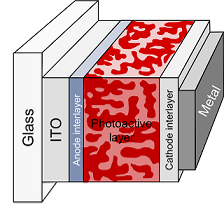
Figure 1. Schematic illustration of the different layers present in organic photovoltaic devices. The photoactive layer is characterised by blending the electron donor and acceptor at the nanoscale. Therefore, heterojunction interfaces exist throughout the bulk of the photoactive layer (the so-called ‘bulk-heterojunction’ architecture).
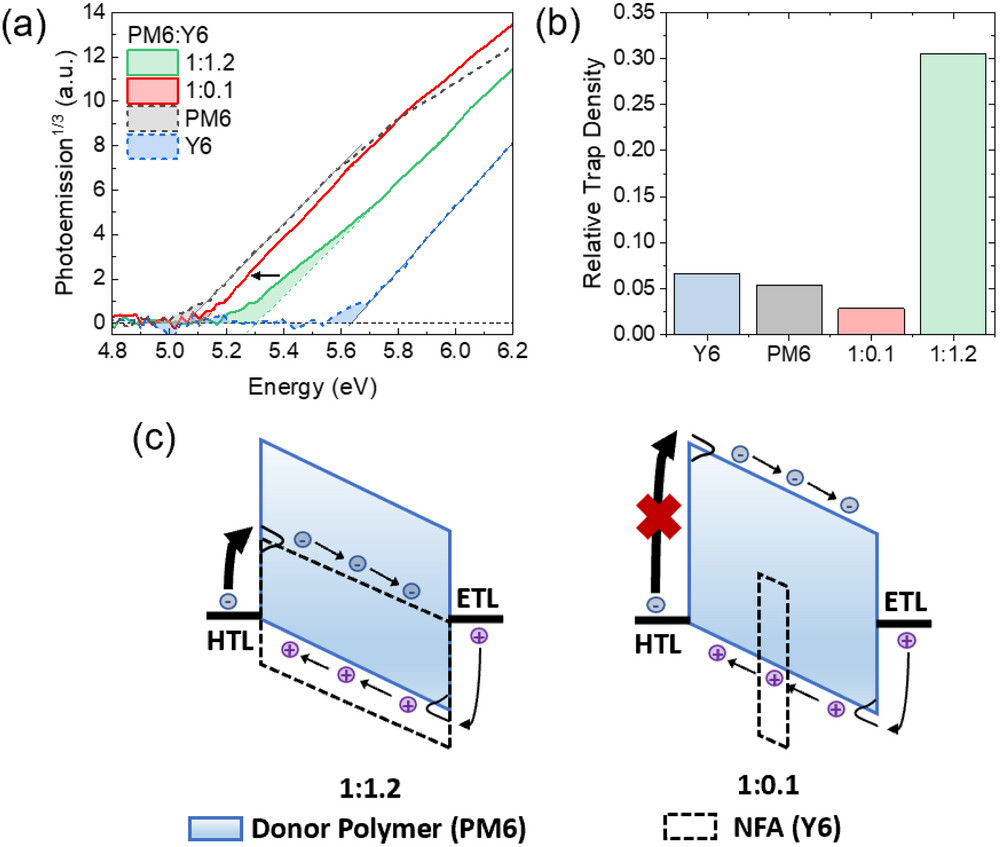
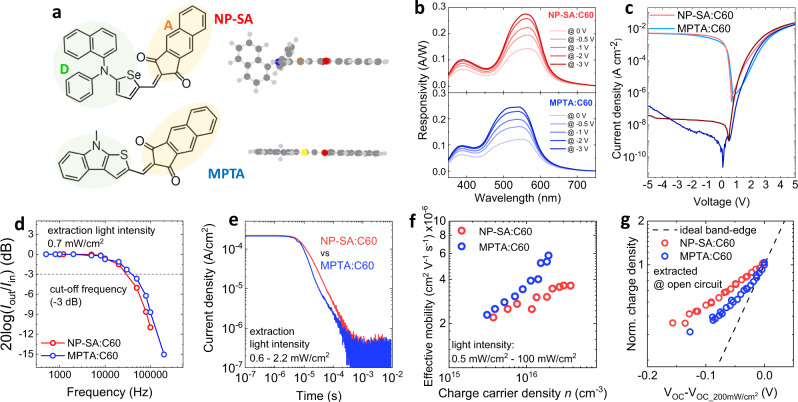
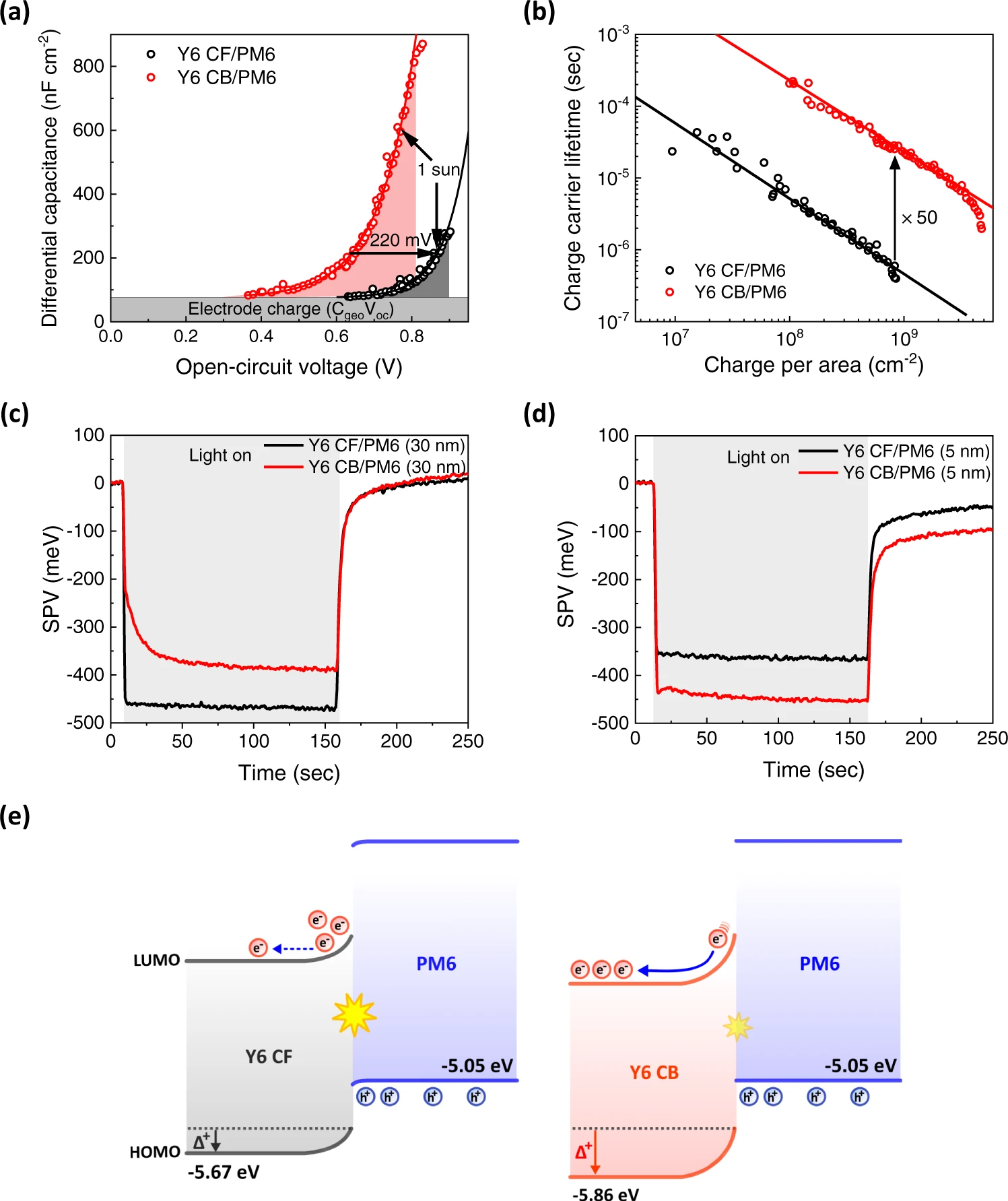
Our work combines complementary structural, optical, electronic, and spectroscopic characterisation techniques with computational approaches, including density functional theory, to connect molecular properties with device photophysics and performance. For example, recent work has shown that molecular planarity can strongly influence trap-state formation and photoresponse in organic photodetectors [1], while molecular quadrupole moments can correlate with photostability in non-fullerene acceptors [2].
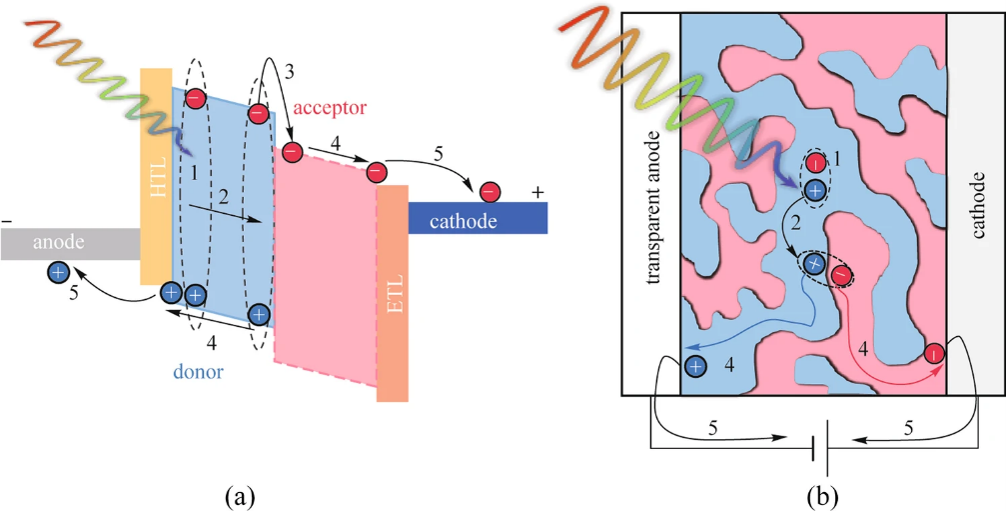
Figure 2. a) Energy diagrams and b) working mechanisms for a general type OPD.
Example Projects
- Investigating charge generation in single-component organic photovoltaics
- Studying morphological stability in ternary organic photovoltaic blends
- Reducing dark current in organic photodetectors
- Understanding molecular planarity and trap-state formation in organic photodetector blends
- Using resonant Raman spectroscopy and computational modelling to identify molecular degradation pathways in non-fullerene acceptors
Recent Publications:
[1] Light-Intensity-Dependent Photoresponse Time of Organic Photodetectors and Its Molecular Origin
Labanti, C. et al. Nature Communications 2022, 13, 3745.
DOI: 10.1038/s41467-022-31367-4
[2] Molecular Orientation-Dependent Energetic Shifts in Solution-Processed Non-Fullerene Acceptors and Their Impact on Organic Photovoltaic Performance
Fu, Y. et al. Nature Communications 2023, 14, 1870.
DOI: 10.1038/s41467-023-37234-0
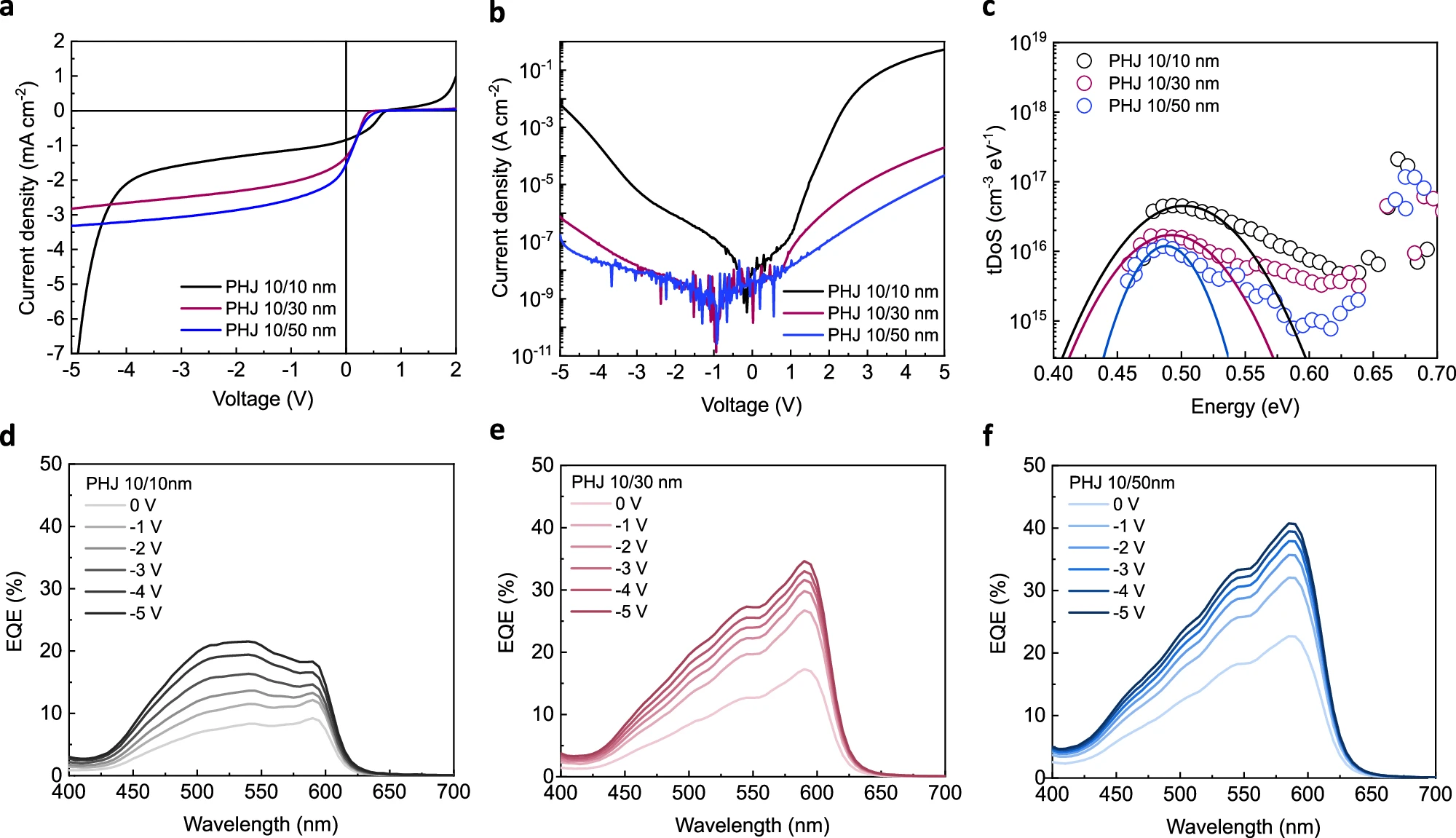
[3] Octupole Moment Driven Free Charge Generation in Partially Chlorinated Subphthalocyanine for Planar Heterojunction Organic Photodetectors
Rana, A.; Park, S. Y.; Labanti, C. et al. Nature Communications 2024, 15, 5058.
DOI: 10.1038/s41467-024-49169-1
[4] Breaking Crystallinity for Optimal Dark Current: Nonfullerene Acceptor Dilution as a Strategy for High-Performance Organic Photodetectors
Labanti, C.; Sun, Y.; Luke, J. et al. Advanced Optical Materials 2025.
DOI: 10.1002/adom.202500255