Perovskite and Hybrid Materials
How can molecular and hybrid materials enable the next generation of low-cost, high-efficiency solar energy technologies?
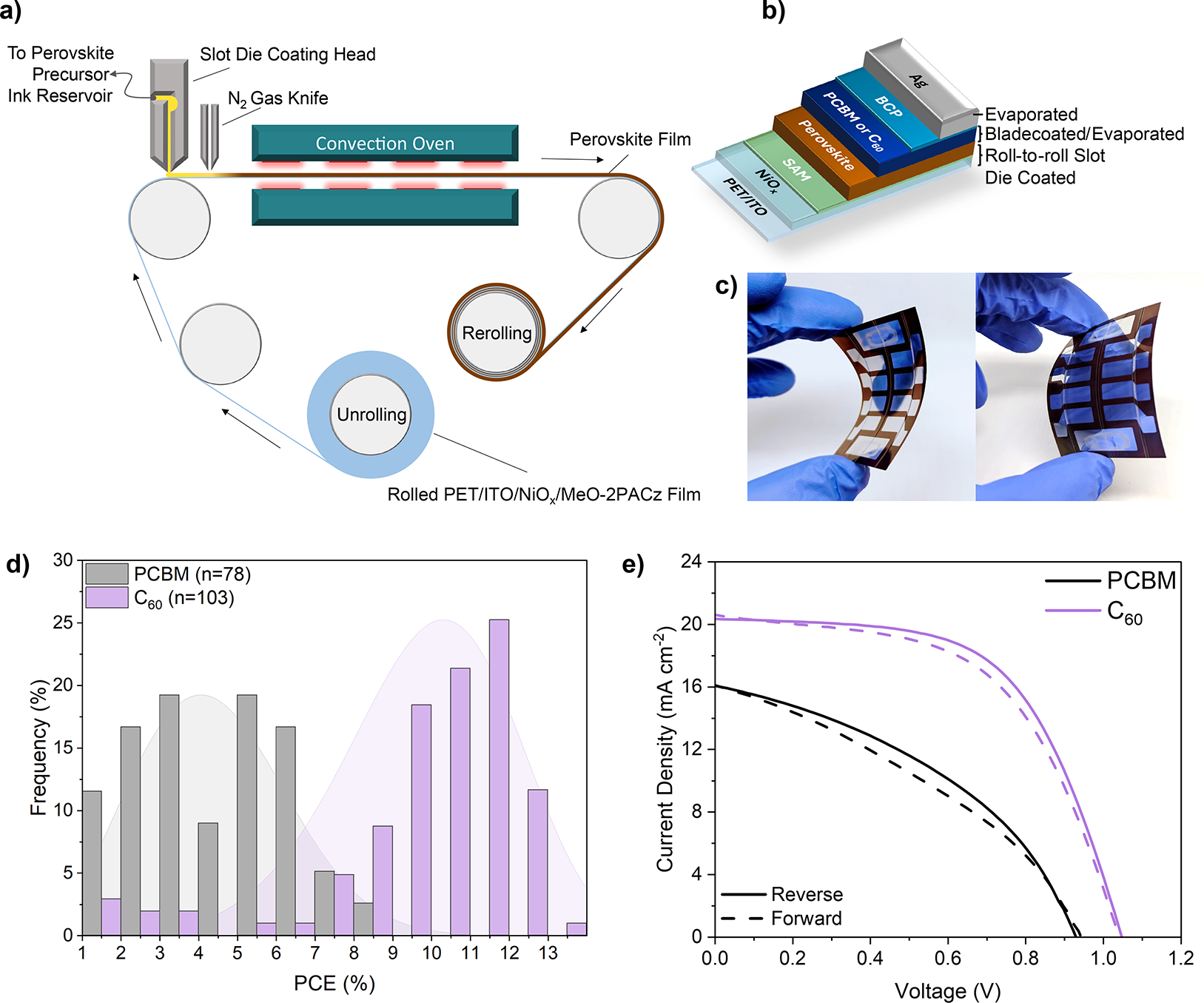
With the growing demand for clean and sustainable energy, there is increasing interest in photovoltaic technologies beyond conventional silicon solar cells. Perovskites are promising materials for next-generation photovoltaics because of their strong optoelectronic properties, high charge-carrier mobilities, tuneable bandgaps, and relatively low-cost fabrication. Perovskite solar cells (PSCs) have now reached power conversion efficiencies above 27%, making them one of the most competitive emerging photovoltaic technologies. However, their performance and long-term stability are still affected by losses at interfaces and by non-ideal energy-level alignment.
Our group studies the physical processes behind these losses using a range of spectroscopic, energetic, and photophysical techniques. We aim to understand how material structure, composition, density of traps and energy levels affect charge generation, transport, and recombination, and how these processes influence device performance and stability. Our work covers organic-inorganic hybrid materials, particularly perovskites, for applications in photovoltaics, photodetectors, and other hybrid electronic devices.
Current Areas of Research:
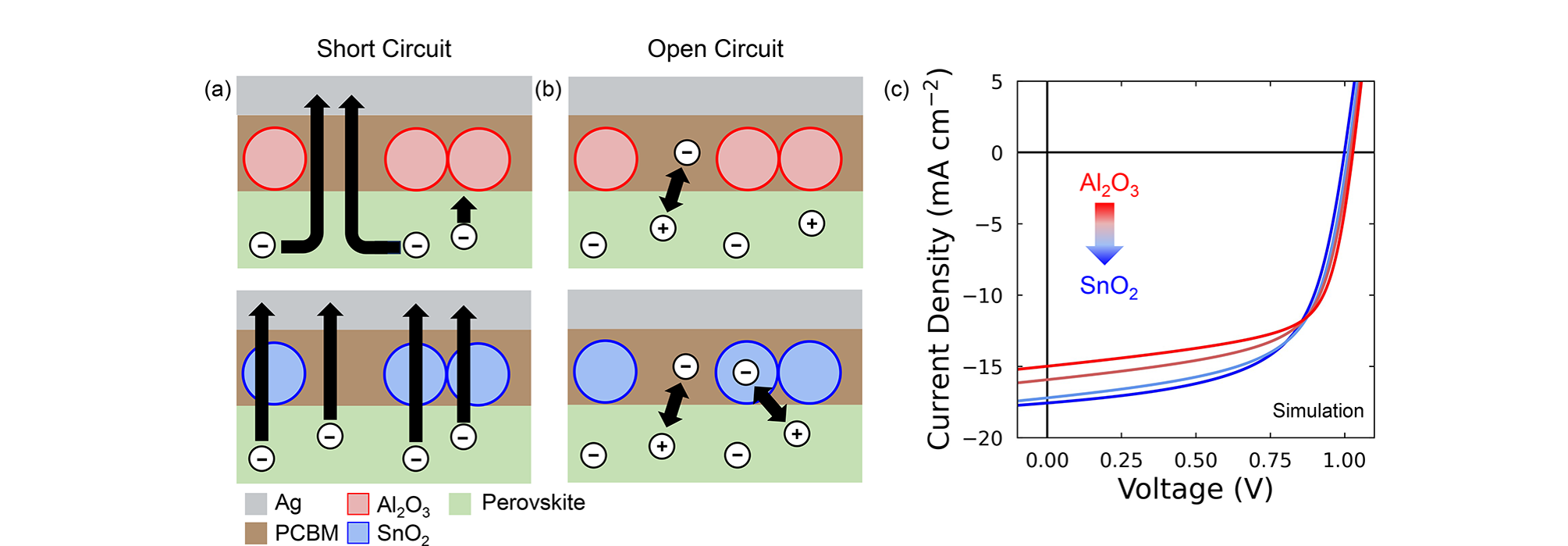
- Interfacial Recombination: We investigate charge recombination processes at interfaces and study how transport-layer composition, interfacial energetics, and molecular interactions influence open-circuit voltage losses and charge extraction efficiencies in perovskite solar cells.
- Organic Transport Materials: We explore the role of advanced organic charge-transport materials in determining energetic alignment, interfacial charge transfer, non-radiative, and device performance in perovskite photovoltaics.
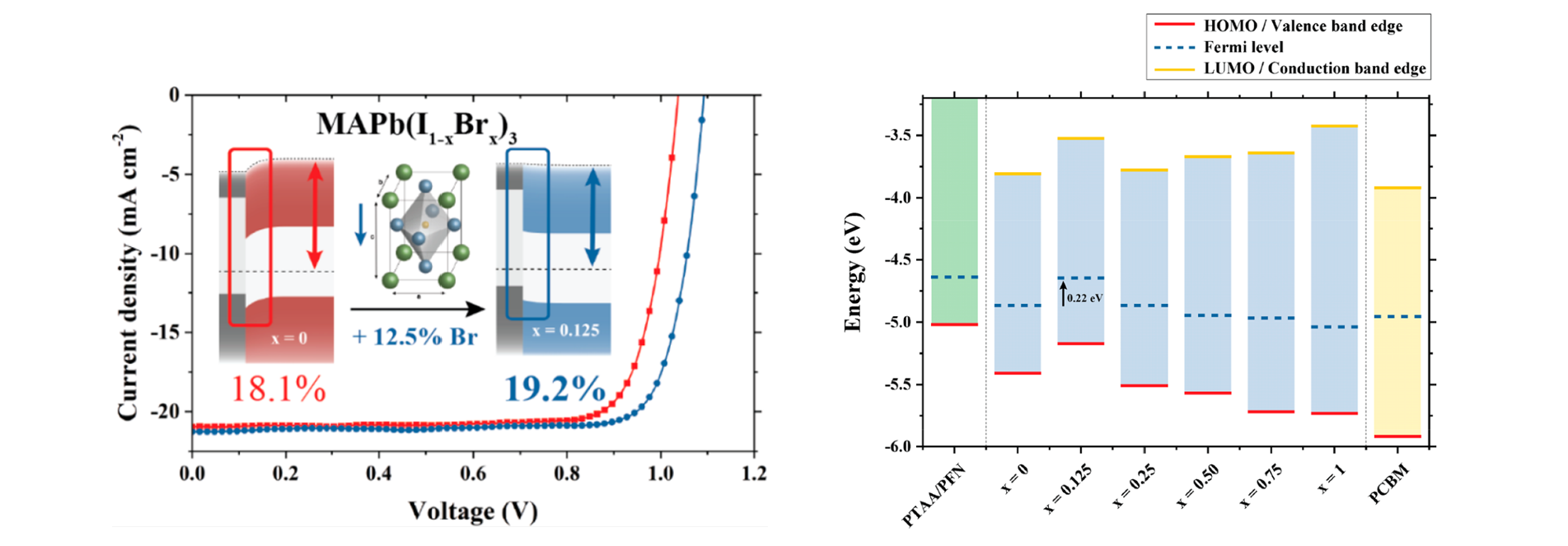
- Fine-Tuning Perovskite Composition: Our research investigates how variations in perovskite dimensionality, composition, and structural heterogeneity influence energetic landscapes, density of states distributions, charge transport, and long-term material stability.
Example Projects
- Studying the impact of mixed-dimensional perovskite compositions on charge transport and recombination dynamics
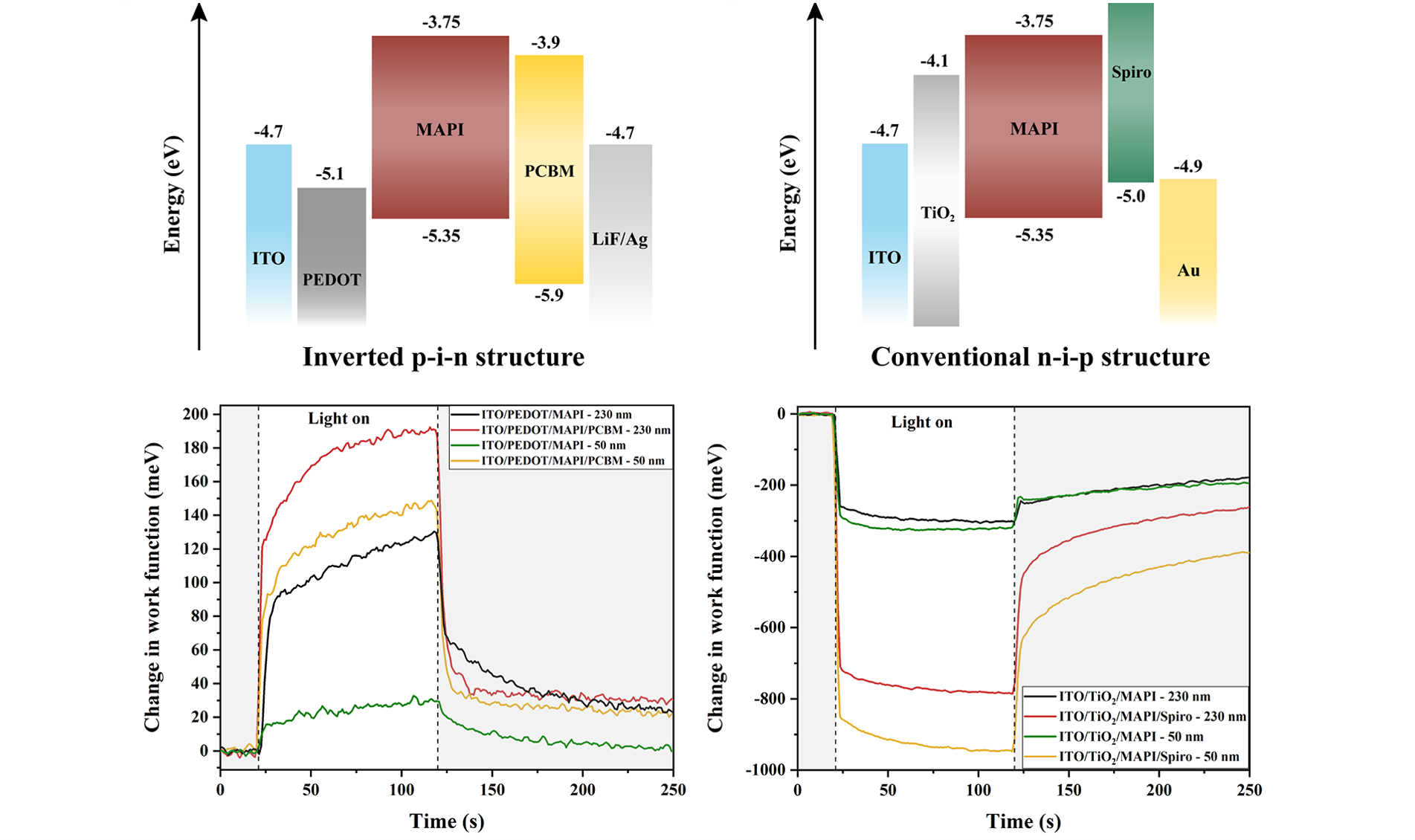
- Understanding interfacial voltage losses in perovskite solar cells via surface photovoltage spectroscopy
- Interfacial recombination driven by trap states in metal oxides for n-i-p perovskite solar cells
- Investigating energetic alignment in organic charge transport layers for p-i-n perovskite solar cells
Related Publications
- Origin of Open-Circuit Voltage Losses in Perovskite Solar Cells Investigated by Surface Photovoltage Measurement https://doi.org/10.1021/acsami.9b16394
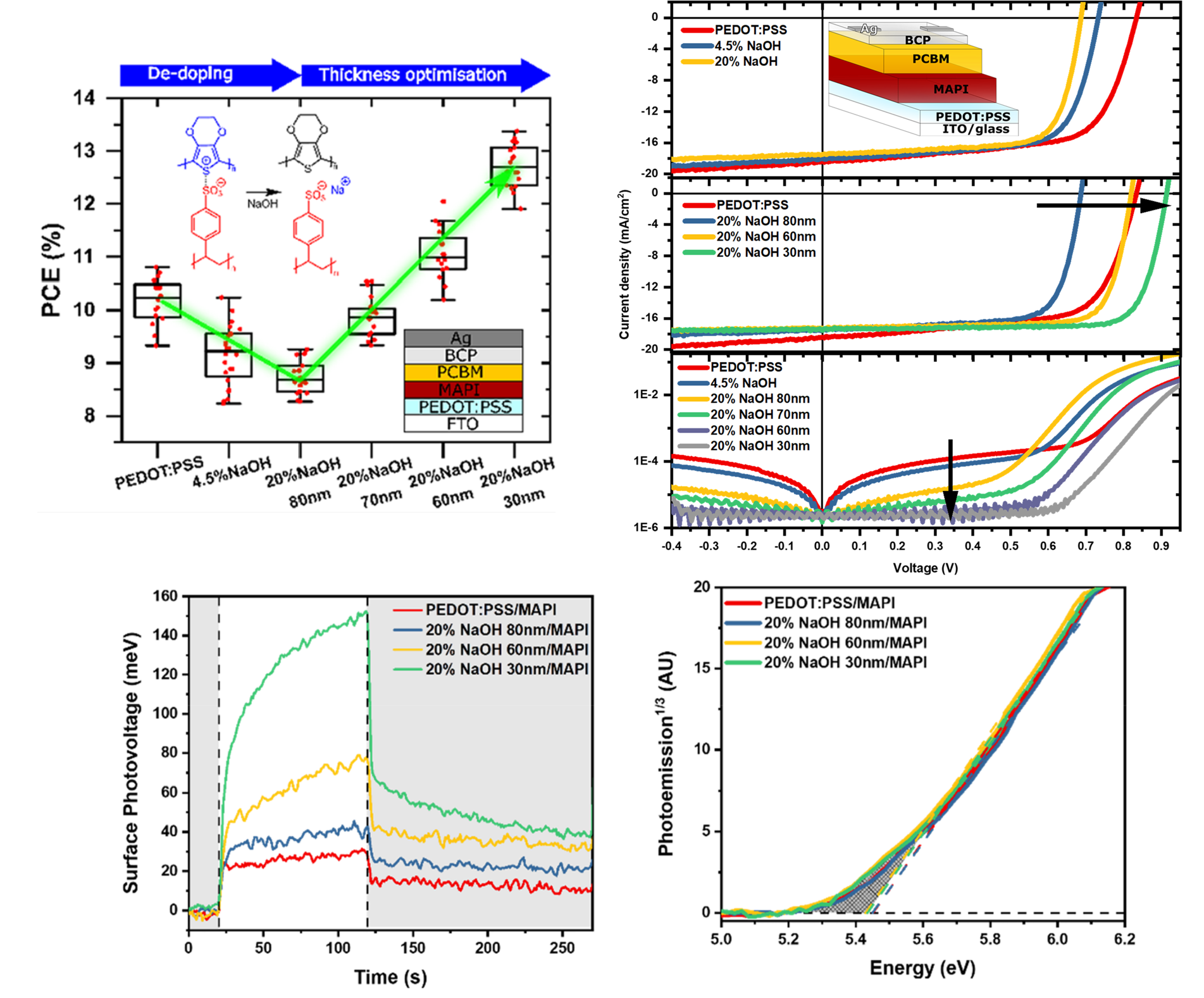
- PEDOT:PSS Doping-Induced Interfacial Recombination Loss in Perovskite Solar Cells https://doi.org/10.1021/acsenergylett.1c02577
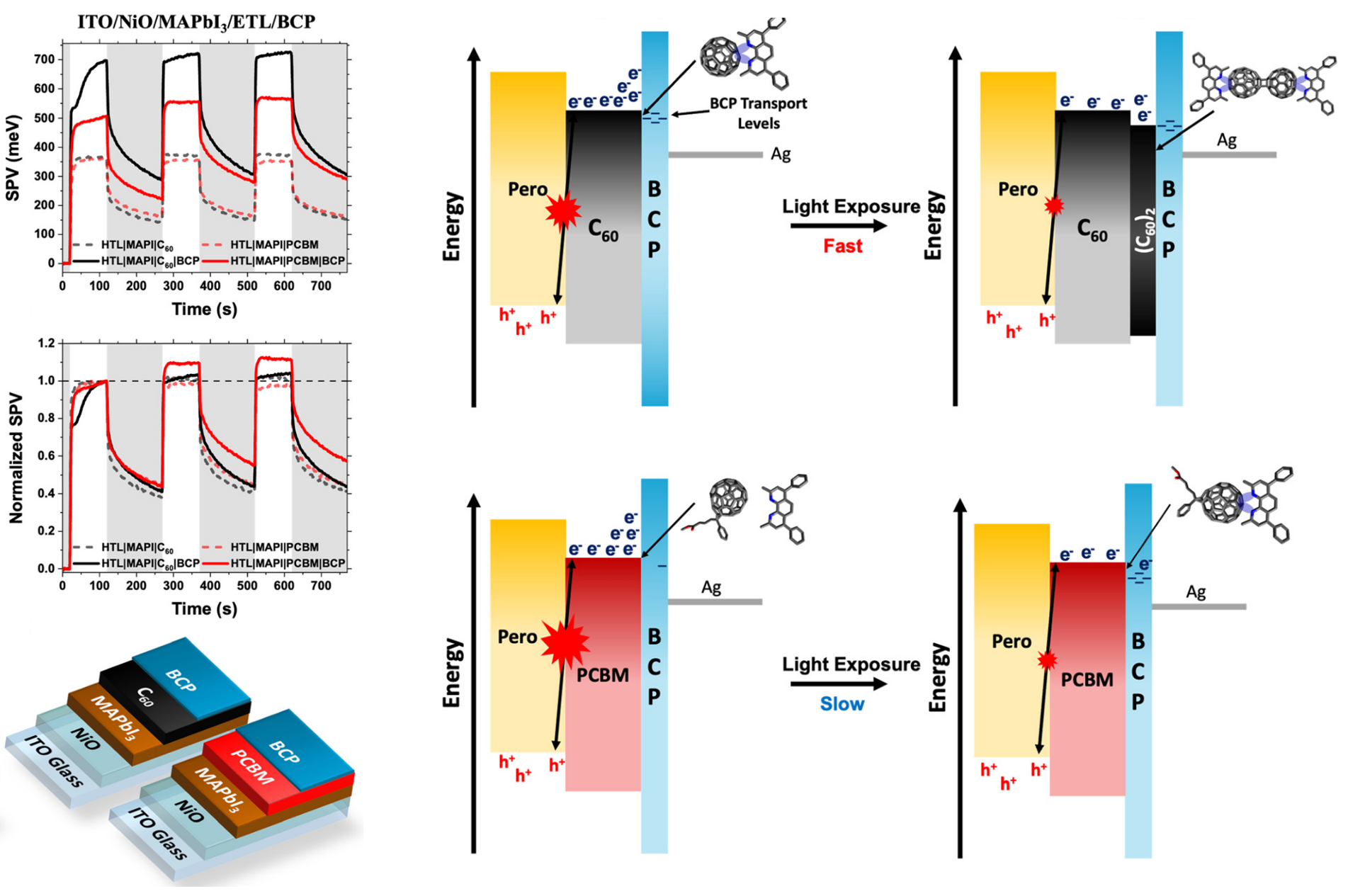
- Charge Transfer Complex Formation between Organic Interlayers Drives Light-Soaking in Large-Area Perovskite Solar Cells https://doi.org/10.1039/d3ee02571c
- Nanoparticle-Mediated Interface Engineering for Uniform, Reproducible Electron Transport Layers in Scalable Perovskite Solar Cells https://doi.org/10.1021/acsami.5c24295